---
title: "Chinese Curriculum Explained 2026: How It Compares to UK and US Education"
description: The Chinese national curriculum, from the gaokao to the zhongkao, compared with UK and US year groups and exams for families weighing their options.
image: https://blog.doris.school/hubfs/jerry-wang-WHG8rkk_FEY-unsplash.jpg
---
[Skip to content](https://blog.doris.school/chinese-curriculum-explained#main-content)
[.svg)](https://tips.doris.school/)
- [Ask doris](https://tips.doris.school/chat)
- [Explore events](https://tips.doris.school/schools/events)
- [My shortlist](https://tips.doris.school/parent/dashboard/compare)
Open main navigation
Close main navigation
- [Ask doris](https://tips.doris.school/chat)
- [Explore events](https://tips.doris.school/schools/events)
- [My shortlist](https://tips.doris.school/parent/dashboard/compare)
- [Find schools](https://tips.doris.school/schools)
[Find schools](https://tips.doris.school/schools)
[All posts](https://www.doris.school/international-school-guide)
July 8, 2026
# Chinese Curriculum Explained 2026: How It Compares to UK and US Education
-1.png?width=50&name=Team%20pics%20(2)-1.png) By Aziza F · 5 minute read
The Chinese curriculum, built around the gruelling gaokao university entrance exam, is the education system followed by over 180 million school-age children on the mainland, yet it is far less common abroad than the British, American or French systems. There is no Chinese equivalent of the AEFE network sending state-run schools worldwide. Families who want a Chinese-medium education for their children outside China are instead choosing between a small number of diaspora-founded independent schools and bilingual programmes that blend Chinese language and content into another national curriculum.
[](https://blog.doris.school/hs/cta/wi/redirect?encryptedPayload=AVxigLJCeZaAIb9Q1h2EUEeIylXfiFKXW4PELYluoFbw3a%2Bi20S58JpLkLuGTPu%2BFDTd8s%2Fe7y2f0WHWMhc5hoFasyfc%2FF9uiSkmbr91m%2BjVHDDXgCE6GHf6sqyZs5rBjUxbjNI%2BMfRoZhMf0GAT2pAUDgnP%2FQVWCdQ%2FwbjkR8ot&webInteractiveContentId=433170395332&portalId=145372008)
## Quick Comparison: Chinese vs UK vs US Curriculum
| | Chinese (national) | British (Cambridge) | American (AP/Diploma) |
| --- | --- | --- | --- |
| **Age range** | Primary 1–Senior 3 (ages 6–18) | Year 1–13 (ages 5–18) | K–12 (ages 5–18) |
| **Key qualifications** | Zhongkao (Grade 9), Gaokao (Grade 12) | IGCSE, A Level | High School Diploma, SAT/ACT |
| **Assessment style** | High-stakes single exams | Mixed: exams + coursework | GPA + standardised testing |
| **Subject load (final years)** | Chinese, maths, foreign language, plus 3 elective subjects | 3–4 A Levels | Flexible, credit-based |
| **University recognition** | Score-ranked, provincial quotas | Global | Global |
| **Strengths** | Depth in maths and science, exam discipline | Independent thinking, breadth | Flexibility, college-level AP courses |
*Schools shown for informational purposes only. doris does not rank or promote any school.*
*[](https://blog.doris.school/hs/cta/wi/redirect?encryptedPayload=AVxigLL3t%2Fwq2YpT2jTd%2Bo0cfYngc9aIq7a6eJtS%2B%2F0OU90sTjI7vMuPYl0Z%2Bf7RqOFE5AyxxWvdZjdUtxs5pejlhP%2Fo5KzRPTxBYuroS%2Fm%2F%2BPGMEoWLNei33foUs4GhjxsjCPimy1k3GY6KT5lSMDgRxrH74Hqpt7lmrZe2gg6D&webInteractiveContentId=433169900752&portalId=145372008)*
## What Is the Chinese Curriculum?
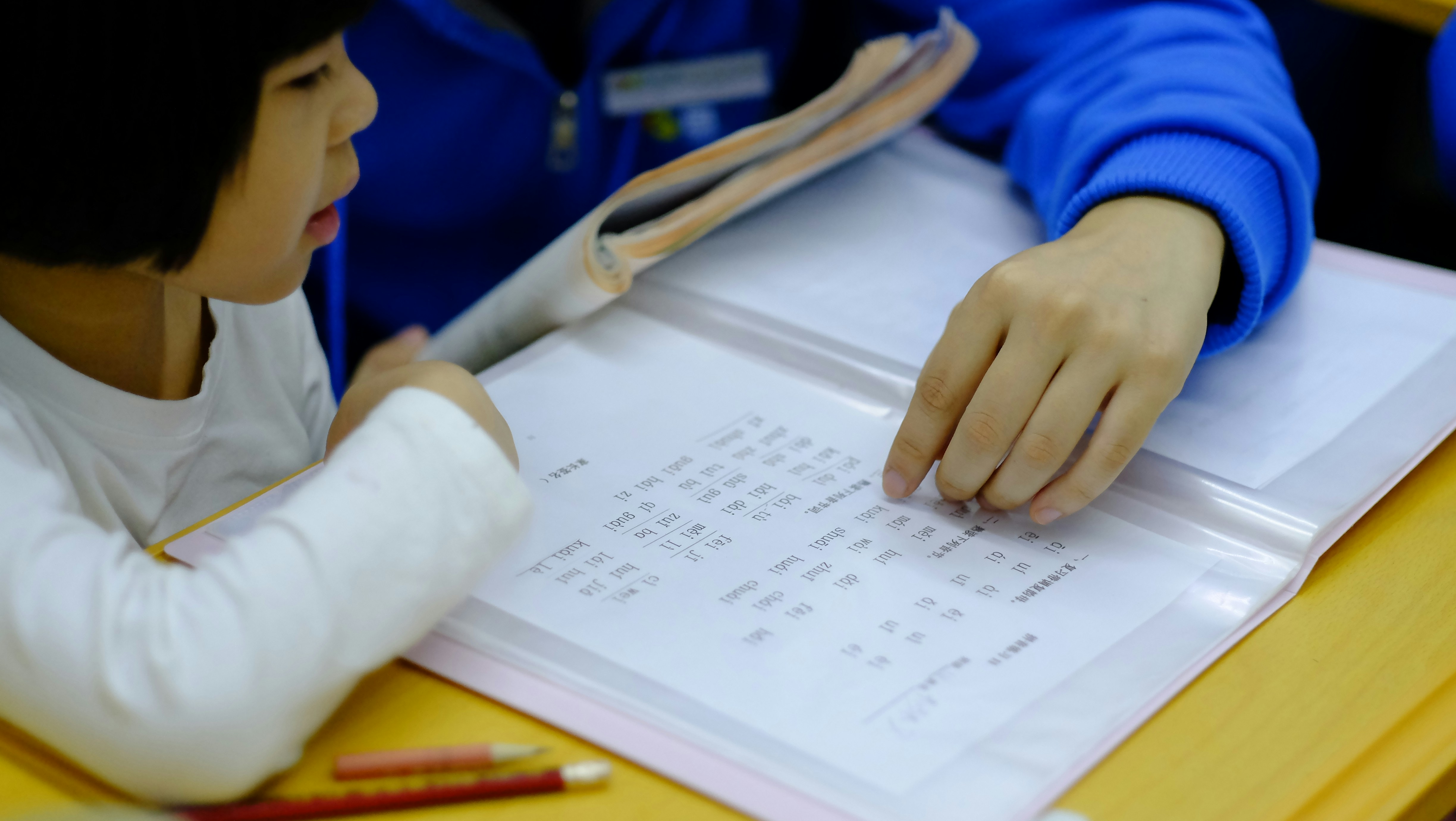
Set by China's Ministry of Education, the curriculum runs on a 6-3-3 structure: six years of primary school, three years of junior secondary, three years of senior secondary. At the end of Grade 9, students sit the zhongkao, which determines entry into academic or vocational senior secondary tracks. At the end of Grade 12, they sit the gaokao, a two-day exam covering Chinese, mathematics, a foreign language and a small set of elective subjects, with a score that largely determines which university, and which city, a student can attend.
Because the gaokao is tied to household registration (hukou) and provincial admissions quotas, it is not designed with mobile international families in mind. This is the main reason genuine Chinese-curriculum schools are rare outside mainland China: there is little institutional demand for a system whose end qualification is hardest to use anywhere else.
[](https://blog.doris.school/hs/cta/wi/redirect?encryptedPayload=AVxigLJCeZaAIb9Q1h2EUEeIylXfiFKXW4PELYluoFbw3a%2Bi20S58JpLkLuGTPu%2BFDTd8s%2Fe7y2f0WHWMhc5hoFasyfc%2FF9uiSkmbr91m%2BjVHDDXgCE6GHf6sqyZs5rBjUxbjNI%2BMfRoZhMf0GAT2pAUDgnP%2FQVWCdQ%2FwbjkR8ot&webInteractiveContentId=433170395332&portalId=145372008)
### What Is the Difference Between the Chinese and UK Curriculum?
British qualifications reward specialisation. A Sixth Form student narrows to three or four A Levels chosen for university applications. A Chinese senior secondary student instead studies a broader, more prescribed core through to Grade 12, with far less choice over subject combinations and a single exam sitting deciding the outcome, rather than staged assessment across two years. Families weighing the two systems side by side may also find the [IB vs British curriculum guide on doris](https://blog.doris.school/ib-curriculum-vs.-british-curriculum-a-complete-comparison-for-parents) useful, since many diaspora schools blend Chinese content into an IB or Cambridge framework rather than teaching a pure Chinese track.
### What Is the Difference Between the Chinese and US Curriculum?
The American system runs on GPA and credit accumulation, with students choosing AP courses in their strongest subjects from Grade 9 onward. The gaokao offers no equivalent flexibility: subject choice is limited, and the score from a single exam sitting outweighs years of continuous assessment. Chinese students applying to US universities from a mainland school will typically need SAT or TOEFL scores, since American admissions offices have limited familiarity with gaokao scoring conventions and provincial variation.
## Year Group Conversion
| Chinese Grade | UK Year | US Grade | Typical Age |
| --- | --- | --- | --- |
| Primary 1 (小学一年级) | Year 2 | Grade 1 | 6–7 |
| Primary 6 (小学六年级) | Year 7 | Grade 6 | 11–12 |
| Junior 3 (初三) | Year 10 | Grade 9 | 14–15 |
| Senior 1 (高一) | Year 11 | Grade 10 | 15–16 |
| Senior 3 (高三) | Year 13 | Grade 12 | 17–18 |
*Schools shown for informational purposes only. doris does not rank or promote any school.*
### Why Some Families Choose a Chinese-Medium Education
For families settled in longstanding Chinese diaspora communities across Southeast Asia, the appeal is rarely the gaokao itself. It is Mandarin literacy, classical Chinese literature, and a cultural continuity that many independent Chinese-medium schools have preserved for over a century, often since the early 1900s. For newer relocating Chinese families, the pull tends to be more practical: bilingual programmes that keep a child's Mandarin genuinely strong while they also gain an internationally portable qualification such as the IGCSE or IB.
[](https://blog.doris.school/hs/cta/wi/redirect?encryptedPayload=AVxigLJCeZaAIb9Q1h2EUEeIylXfiFKXW4PELYluoFbw3a%2Bi20S58JpLkLuGTPu%2BFDTd8s%2Fe7y2f0WHWMhc5hoFasyfc%2FF9uiSkmbr91m%2BjVHDDXgCE6GHf6sqyZs5rBjUxbjNI%2BMfRoZhMf0GAT2pAUDgnP%2FQVWCdQ%2FwbjkR8ot&webInteractiveContentId=433170395332&portalId=145372008)
### What Do Families Actually Give Up?
A pure gaokao-track education abroad is now almost impossible to find, and most families should not expect one. Independent Chinese-medium schools such as Malaysia's UEC network teach a demanding, Chinese-language curriculum, but their qualification is not recognised by every local government university, so graduates often plan from the outset to study in China, Taiwan, Singapore or further afield. Bilingual schools that blend Chinese content into a British or IB framework give up curriculum depth in Chinese literature and history in exchange for a globally recognised exit qualification. Families should ask any school directly which parts of the Chinese national curriculum, if any, are genuinely taught, since branding varies widely and "Chinese curriculum" is sometimes used loosely to mean strong Mandarin provision rather than the mainland syllabus itself.
## Chinese Curriculum Schools on doris
On doris, you can search by country and city, then filter by curriculum to compare schools like these side by side.
| School | Location | About |
| --- | --- | --- |
| [British Mandarin International School](https://tips.doris.school/schools/thailand/british-mandarin-international-school) | Bangkok, Thailand | Formerly Mandarin International School, this is Thailand's first school to blend the Chinese National Curriculum with the English National Curriculum, recognised by the Chinese Embassy in Thailand for Mandarin learning. Fees: THB 379,500–751,000 (approx. USD 10,450–20,650). Popular with Chinese, Thai and international families, though the school is still relatively young and secondary provision continues to expand. |
| [Chiang Kai Shek College](https://tips.doris.school/schools/philippines/chiang-kai-shek-college-manila-campus) | Manila, Philippines | The largest Filipino-Chinese school in the Philippines, founded in 1939, now delivering the Philippine K-12 curriculum alongside compulsory Mandarin and an IB Primary, Middle Years and Diploma pathway. Fees: PHP 95,000–225,000 (approx. USD 1,660–3,940). A practical option for Chinese-Filipino families wanting heritage language provision without giving up an internationally recognised exit qualification. |
| [New Gateway International School](https://tips.doris.school/schools/cambodia/new-gateway-international-school) | Phnom Penh, Cambodia | A trilingual school teaching the Cambodian national curriculum and Cambridge IGCSE alongside integrated Chinese language and culture classes. Fees: approx. KHR 11.8–21.9 million (approx. USD 2,900–5,400). Worth noting this is a Chinese-language strand within a Cambodian and British framework rather than the Chinese national curriculum itself, which suits families prioritising Mandarin fluency over an authentic mainland syllabus. |
*Schools shown for informational purposes only. doris does not rank or promote any school.*
*[](https://blog.doris.school/hs/cta/wi/redirect?encryptedPayload=AVxigLL3t%2Fwq2YpT2jTd%2Bo0cfYngc9aIq7a6eJtS%2B%2F0OU90sTjI7vMuPYl0Z%2Bf7RqOFE5AyxxWvdZjdUtxs5pejlhP%2Fo5KzRPTxBYuroS%2Fm%2F%2BPGMEoWLNei33foUs4GhjxsjCPimy1k3GY6KT5lSMDgRxrH74Hqpt7lmrZe2gg6D&webInteractiveContentId=433169900752&portalId=145372008)*
### Frequently Asked Questions
**Is the gaokao recognised by UK or US universities?** Rarely on its own. Most UK and US universities have limited familiarity with gaokao scoring, so students applying from a mainland Chinese school typically also need IELTS or TOEFL, and often SAT scores, to support their application.
**Can a non-Chinese-speaking child join a Chinese-medium school abroad?** It depends heavily on the school. Independent Chinese-medium schools such as Malaysia's UEC network expect strong existing Mandarin literacy from admission, while bilingual schools blending Chinese into a British or IB framework are usually more accessible to beginners.
**Is the UEC the same as the Chinese national curriculum?** No. The UEC is a separate qualification developed by Malaysia's Dong Zong for Chinese-medium independent schools. It is taught in Mandarin and shares some content with the mainland syllabus, but it is not the same as China's gaokao-track curriculum, and government recognition varies by Malaysian state.
**Do Chinese curriculum schools exist for expat families relocating to Southeast Asia?** Not in the way French or British curriculum schools do. Most options blend Mandarin and Chinese content into a Cambridge, IB or local national framework rather than teaching the mainland Chinese curriculum in full.
doris is a free, impartial international school discovery platform designed to help parents find the right international school for their children worldwide. Every school profile includes fees, curriculum, admissions, pupil numbers and more. Parents can compare schools, contact schools directly, access expert parent guides, and connect with a community of parents around the world. Start your search at doris.school.
*This guide was written by Aziza F, part of the doris editorial team. doris sources school data from institutions worldwide and speaks directly with parents navigating the school search process. Fee data reflects published and publicly available information for the 2026 to 2027 academic year and is reviewed annually. External sources: [Ministry of Education of the People's Republic of China, moe.gov.cn](http://en.moe.gov.cn/), [Dong Zong, UCSCAM](https://www.dongzong.my/).*
*Schools are listed for informational purposes only. doris does not rank or promote any school.*
### Featured posts
Share [facebook-f icon](http://www.facebook.com/share.php?u=https://blog.doris.school/chinese-curriculum-explained) [linkedin-in icon](http://www.linkedin.com/shareArticle?mini=true&url=https://blog.doris.school/chinese-curriculum-explained) [twitter icon](https://twitter.com/intent/tweet?url=https://blog.doris.school/chinese-curriculum-explained) [pinterest-p icon](http://pinterest.com/pin/create/link/?url=https://blog.doris.school/chinese-curriculum-explained) [envelope icon](mailto:?body=https://blog.doris.school/chinese-curriculum-explained)
[.svg "doris-logo-dark (1)")](http://doris.school)
[facebook-f icon](https://www.facebook.com/doris.school/) [linkedin-in icon](https://www.linkedin.com/company/91639588/admin/dashboard/) [youtube icon](https://youtube.com/@dorisschool?si=i-IRKerbVnHd0vLi) [instagram icon](https://www.instagram.com/doris.school/)
**Learn more**
[About doris](https://tips.doris.school/about)
[Parent Guide](https://tips.doris.school/international-school-guide)
[Transparency Charter](https://tips.doris.school/transparency-charter)
© 2026 doris Worldwide Ltd. All rights reserved.
```json
{
"@context" : "https://schema.org",
"@type" : "BlogPosting",
"author" : {
"@type" : "Person",
"name" : "Aziza F",
"url" : "https://blog.doris.school/author/aziza-f"
},
"dateModified" : "2026-07-08T00:00:00.152Z",
"datePublished" : "2026-07-08T00:00:00.000Z",
"headline" : "Chinese Curriculum Explained 2026: How It Compares to UK and US Education",
"image" : [ "https://blog.doris.school/hubfs/jerry-wang-WHG8rkk_FEY-unsplash.jpg" ],
"mainEntityOfPage" : {
"@id" : "https://blog.doris.school/chinese-curriculum-explained",
"@type" : "WebPage"
},
"publisher" : {
"@type" : "Organization",
"logo" : {
"@type" : "ImageObject",
"url" : "https://blog.doris.school/hubfs/doris_logo_dark%20(1).png"
}
}
}
```
```json
{
"@context" : "http://schema.org",
"@type" : "Article",
"author" : {
"@type" : "Person",
"name" : [ "Aziza F" ]
},
"datePublished" : "2026-07-08T00:00:00+0000",
"description" : "The Chinese national curriculum, from the gaokao to the zhongkao, compared with UK and US year groups and exams for families weighing their options.",
"headline" : "Chinese Curriculum Explained 2026: How It Compares to UK and US Education",
"image" : "https://145372008.fs1.hubspotusercontent-eu1.net/hubfs/145372008/jerry-wang-WHG8rkk_FEY-unsplash.jpg",
"publisher" : {
"@type" : "Organization",
"logo" : {
"@type" : "ImageObject",
"url" : "https://145372008.fs1.hubspotusercontent-eu1.net/hubfs/145372008/doris_logo_dark%20(1).png"
},
"name" : "Doris Worldwide Ltd"
},
"url" : "https://blog.doris.school/chinese-curriculum-explained"
}
```