 By
·
5 minute read
By
·
5 minute read
Choosing a school in Japan presents a unique challenge for expat families. It’s a country where the desire for a world-class, English-speaking education often clashes with the wish to immerse children in Japan’s rich culture and language. The search for an affordable international school in Japan isn’t just about price; it’s about finding the right balance. While the premium schools in Tokyo can command fees upwards of ¥10,788,000 (USD 67,400), a growing number of excellent, more affordable options exist across the country. This guide provides an insider’s look at six of the best, with verified 2026 international school costs starting from just ¥587,000 (USD 3,700) annually.
|
School Name |
Annual Fee (¥ / USD) |
Curriculum |
Age Range |
Best For |
|
Tokyo International Public School |
¥587,000 / USD 3,700 |
British/Montessori |
3–18 |
Maximum affordability in Tokyo |
|
Kobe Bilingual School |
¥769,000–897,000 / USD 4,800–5,600 |
English-Japanese Bilingual |
3–18 |
True English-Japanese immersion |
|
Lycée Français International de Kyoto |
¥837,000–1,250,000 / USD 5,200–7,800 |
French |
3–18 |
Complete K-12 French education |
|
Tohoku International School |
¥1,007,000–1,719,000 / USD 6,300–10,700 |
IB (PYP, MYP, DP) |
3–18 |
IB education outside Tokyo |
|
MEES International School Hakusan |
¥1,278,000–1,582,000 / USD 8,000–9,900 |
Montessori/Reggio Emilia |
1–18 |
Child-led, creative education |
|
Hokkaido International School Niseko |
¥1,332,000–1,546,000 / USD 8,300–9,700 |
IPC/IMYC |
3–18 |
Outdoor-focused learning |
What Do Japan’s International Schools Really Cost in 2026?
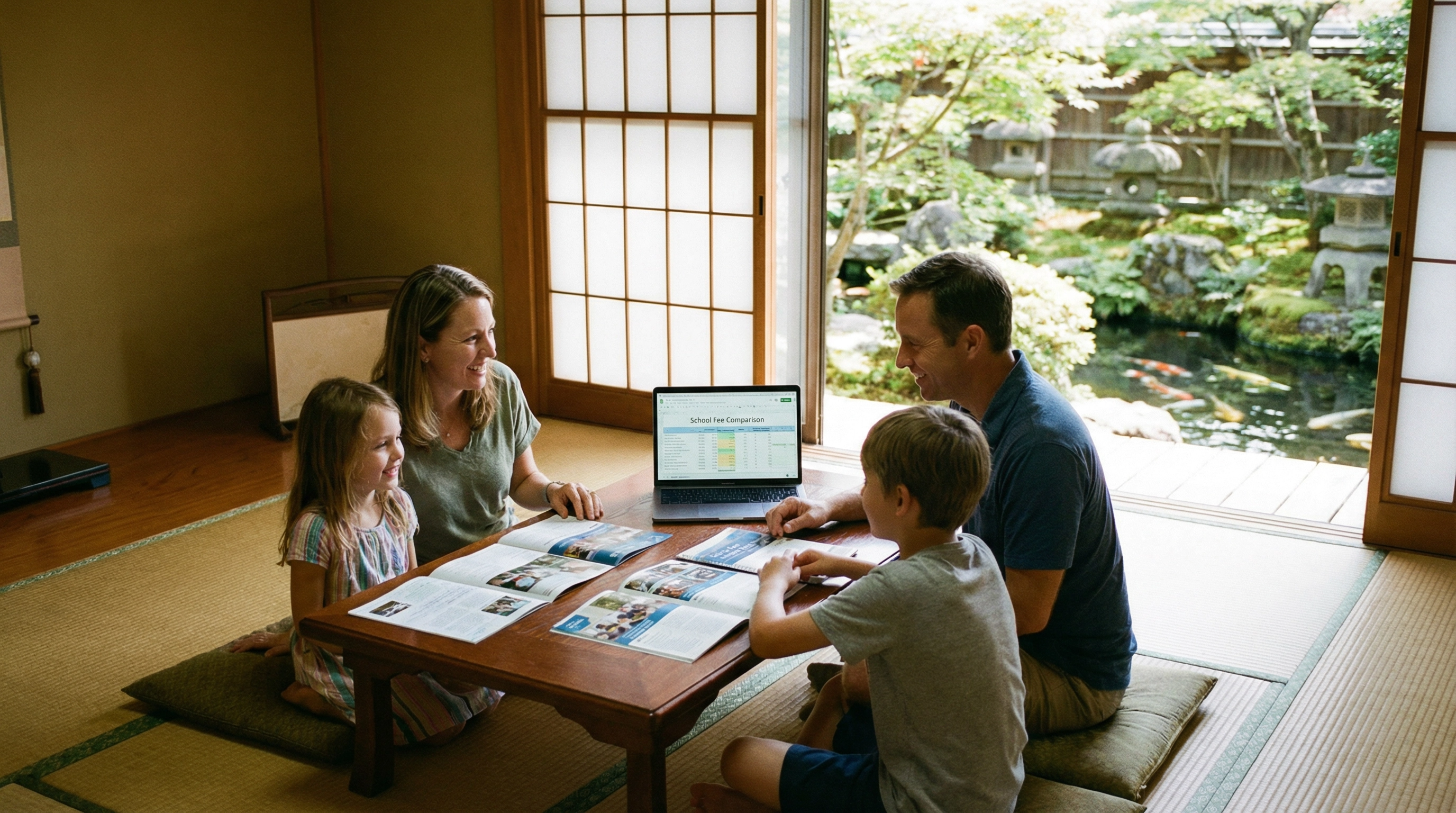
Before comparing schools, it’s crucial to understand that the sticker price is rarely the final price. Japan’s international school fees are often unbundled, meaning you need to budget for several additional costs to get a true picture of your annual expenses.
- Application & Admission Fees: Expect a non-refundable application fee of around ¥41,000–62,000 (USD 300–400) per school.
- Uniforms & Textbooks: Budget approximately ¥41,000–102,000 (USD 300–600) for uniforms and another ¥62,000–164,000 (USD 400–1,000) for textbooks and materials each year.
- Daily Costs & Activities: School lunch can add ¥41,000–82,000 (USD 300–500) per month, while extracurricular activities and school trips can easily add another ¥102,000–308,000 (USD 600–1,900) annually. A safe estimate is to add ¥1,230,000–2,665,000 (USD 7,700–16,600) in total first-year costs on top of tuition for a budget-tier school.
A Review of Japan’s Best-Value International Schools
Tokyo International Public School
Fee: ¥587,000 (USD 3,700)
Curriculum: British/Montessori
Age: 3–18 years
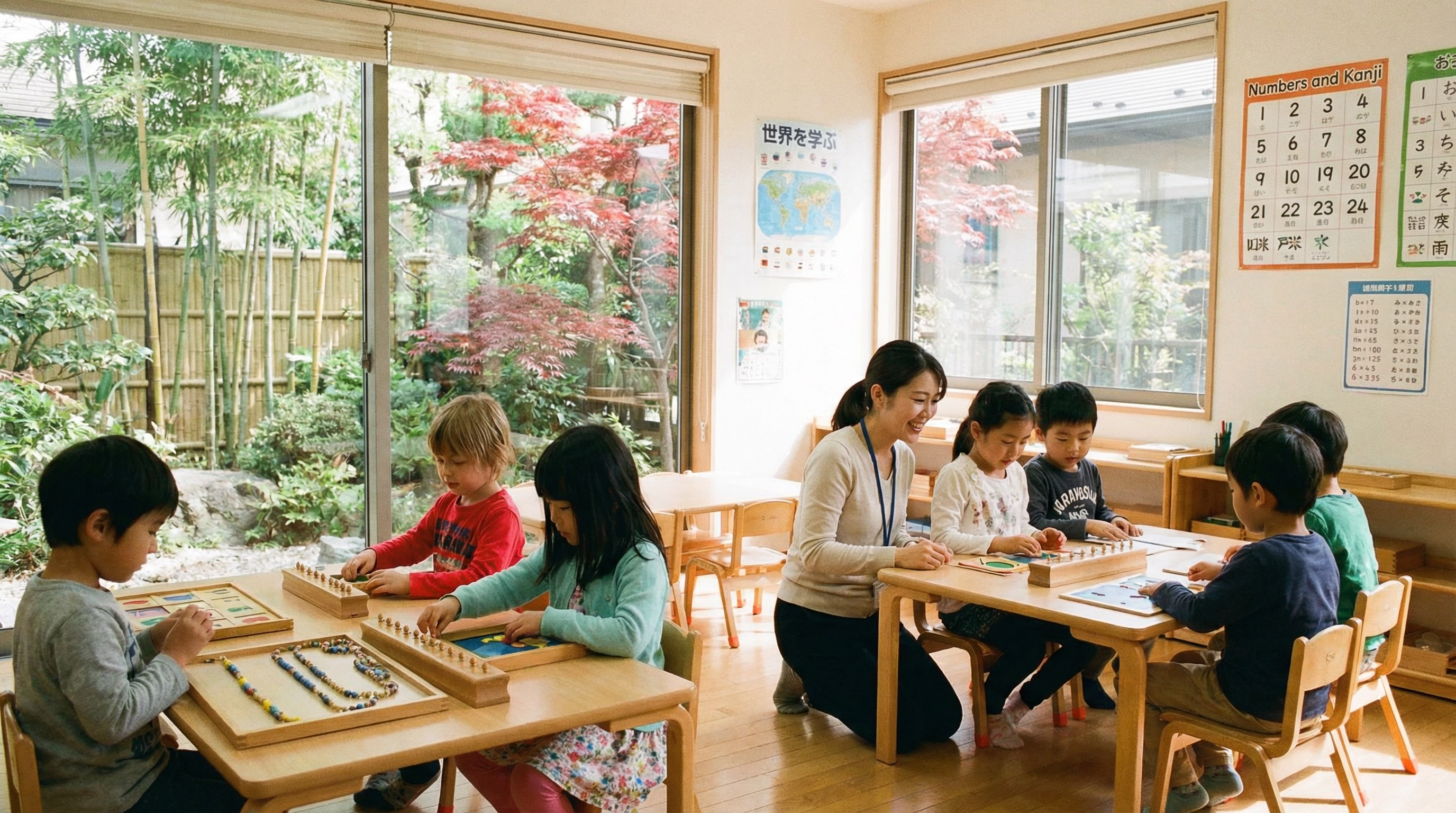
Tokyo International Public School is a remarkable find in the heart of the capital. With annual fees of just ¥587,000 (USD 3,700), it is by far the most affordable option on this list. What makes it stand out is its curriculum flexibility, offering both the structured British/Cambridge pathway and a child-led Montessori programme. This makes it a fantastic and accessible entry point for families new to Japan who want quality education without the premium Tokyo price tag.
Kobe Bilingual School
Fee: ¥769,000–897,000 (USD 4,800–5,600)
Curriculum: English-Japanese Bilingual
Age: 3–18 years
For families who want to ensure their children become truly bilingual, Kobe Bilingual School is an exceptional choice. With fees from ¥769,000–897,000 (USD 4,800–5,600), its entire philosophy is built around integrating English and Japanese instruction throughout the day. With tiny class sizes of around 13 pupils, it provides an intimate, supportive environment perfect for deep language immersion and preserving Japanese heritage.
Lycée Français International de Kyoto
Fee: ¥837,000–1,250,000 (USD 5,200–7,800)
Curriculum: French
Age: 3–18 years
Imagine your child learning in the cultural capital of Japan. The Lycée Français International de Kyoto offers a complete, rigorous French curriculum from ages 3 to 18. With fees from ¥837,000–1,250,000 (USD 5,200–7,800) and class sizes of just 12 pupils, it provides an outstanding French education in an inspiring historical setting. It's an unbeatable option for French-speaking families or those committed to a Francophone education.
Tohoku International School
Fee: ¥1,007,000–1,719,000 (USD 6,300–10,700)
Curriculum: IB (PYP, MYP, DP)
Age: 3–18 years
For families living outside the major metropolitan hubs, Tohoku International School is a vital educational anchor. It offers the globally-respected International Baccalaureate (IB) pathway, from the Primary Years Programme (PYP) to the Diploma Programme (DP), for ¥1,007,000–1,719,000 (USD 6,300–10,700). It provides access to a top-tier curriculum without the need to relocate to Tokyo, making it a cornerstone of the international community in the Tohoku region.
MEES International School Hakusan
Fee: ¥1,278,000–1,582,000 (USD 8,000–9,900)
Curriculum: Montessori/Reggio Emilia
Age: 1–18 years
MEES International School's Hakusan Campus is a haven for families who believe in alternative pedagogies. With fees from ¥1,278,000–1,582,000 (USD 8,000–9,900), it specialises in the Montessori and Reggio Emilia approaches, which champion child-led, exploratory, and creative learning. It's a wonderful, nurturing environment for children from age one, focusing on developing independence and a love of learning from the very beginning.
Hokkaido International School Niseko
Fee: ¥1,332,000–1,546,000 (USD 8,300–9,700)
Curriculum: IPC/IMYC
Age: 3–18 years
For families drawn to Japan's stunning natural landscapes, Hokkaido International School Niseko is the perfect fit. With fees from ¥1,332,000–1,546,000 (USD 8,300–9,700), it serves the thriving expat community in Niseko. The school's use of the International Primary Curriculum (IPC) and International Middle Years Curriculum (IMYC) emphasises thematic, hands-on learning that makes the most of its incredible outdoor environment.
How to Choose the Right School for Your Family
- For maximum affordability in Tokyo: Tokyo International Public School is the clear winner.
- For true English-Japanese bilingualism: Kobe Bilingual School is purpose-built for this.
- For a complete K-12 French education: Lycée Français International de Kyoto is unmatched.
- For a child-led, creative education: MEES International School is the ideal choice.
- For an IB education outside of Tokyo: Tohoku International School is the regional champion.
Practical Tips for Reducing School Costs
1. Ask About Sibling Discounts
Always ask about sibling discounts, which typically range from 10–20%. Some schools may also offer scholarships for academic merit, music, or sports. Don't be afraid to inquire directly with the admissions office.
2. Negotiate Fees Directly
Many international schools in Japan maintain flexibility on fees, particularly for multi-year commitments. Request fee discussions during the application process—schools often offer discounts not advertised publicly.
3. Consider Regional Options
Schools outside Tokyo often offer significantly lower fees whilst maintaining quality education. Kobe, Kyoto, and regional cities provide excellent value alternatives to Tokyo-based institutions.

Frequently Asked Questions
1. What is the absolute cheapest international school in Japan?
Tokyo International Public School offers the lowest fees on this list at ¥587,000 (USD 3,700) annually, providing incredible value with its dual British and Montessori curriculum options. When you factor in hidden costs (approximately ¥1,230,000–1,640,000 / USD 7,700–10,300 annually), your first-year total would be around ¥1,817,000–2,227,000 (USD 11,400–13,900).
2. Are there good bilingual schools in Japan that are affordable?
Yes. Kobe Bilingual School is a prime example, specialising in English-Japanese immersion for under ¥900,000 a year. Many other schools also offer strong Japanese language programmes.
3. Do these affordable schools have lower quality teaching?
No. These schools are more affordable due to factors like smaller campuses, newer facilities, or regional locations, not because of lower teaching standards. They offer excellent, accredited curricula and dedicated staff.
4. How can I reduce the cost of international school fees in Japan?
Always ask about sibling discounts, which typically range from 10-20%. Some schools may also offer scholarships for academic merit, music, or sports. Don’t be afraid to inquire directly with the admissions office.
5. Is it better to choose a school in Tokyo or a regional city?
This depends entirely on your family’s lifestyle preference and budget. Tokyo offers the most choice but has the highest cost of living. Regional cities like Kobe, Kyoto, or those in Hokkaido and Tohoku offer a lower cost of living, a different pace of life, and excellent, community-focused schools.