.svg)
 By
·
4 minute read
By
·
4 minute read
If you're moving to Tokyo with your family, you're probably wondering about international school costs and where to live. Here's what you need to know upfront: Tokyo has over 60 international schools, but the real challenge lies in the unique fee structures and the tight link between school choice and neighborhood. Annual tuition can range from ¥1.5 million to over ¥5.5 million ($10,000 - $37,000+), but the biggest surprise for most families is the one-time, non-refundable "Capital Development Fee," which can add another $6,000 to $13,000+ to your first-year costs.
This guide is designed to give you an honest, inside look at the system, focusing on the two factors that matter most: the true cost of education and the logistics of choosing a family-friendly neighborhood. We'll break down the fees, explore the best expat neighborhoods, and give you the system-level knowledge you need to make a confident choice for your family.
Tokyo International School Fees
To give you a clear financial picture, we've categorized Tokyo's international school fees into three tiers based on 2025-2026 estimates. These figures represent annual tuition and do not include the significant one-off fees that are a unique feature of the Tokyo market.
|
Fee Tier |
Annual Tuition (Primary) |
Annual Tuition (Secondary) |
Characteristics |
|
Budget |
¥1.5M – ¥2.2M (~$10k – $15k) |
¥1.8M – ¥2.5M (~$12k – $17k) |
Smaller campuses, often with newer or niche curricula. |
|
Mid-Tier |
¥2.4M – ¥3.2M (~$16k – $21k) |
¥2.8M – ¥3.8M (~$19k – $25k) |
Established schools with strong facilities and expat communities. |
|
Premium |
¥3.5M – ¥4.5M+ (~$23k – $30k+) |
¥4.0M – ¥5.5M+ (~$27k – $37k+) |
Elite schools with top-tier facilities and university placement. |
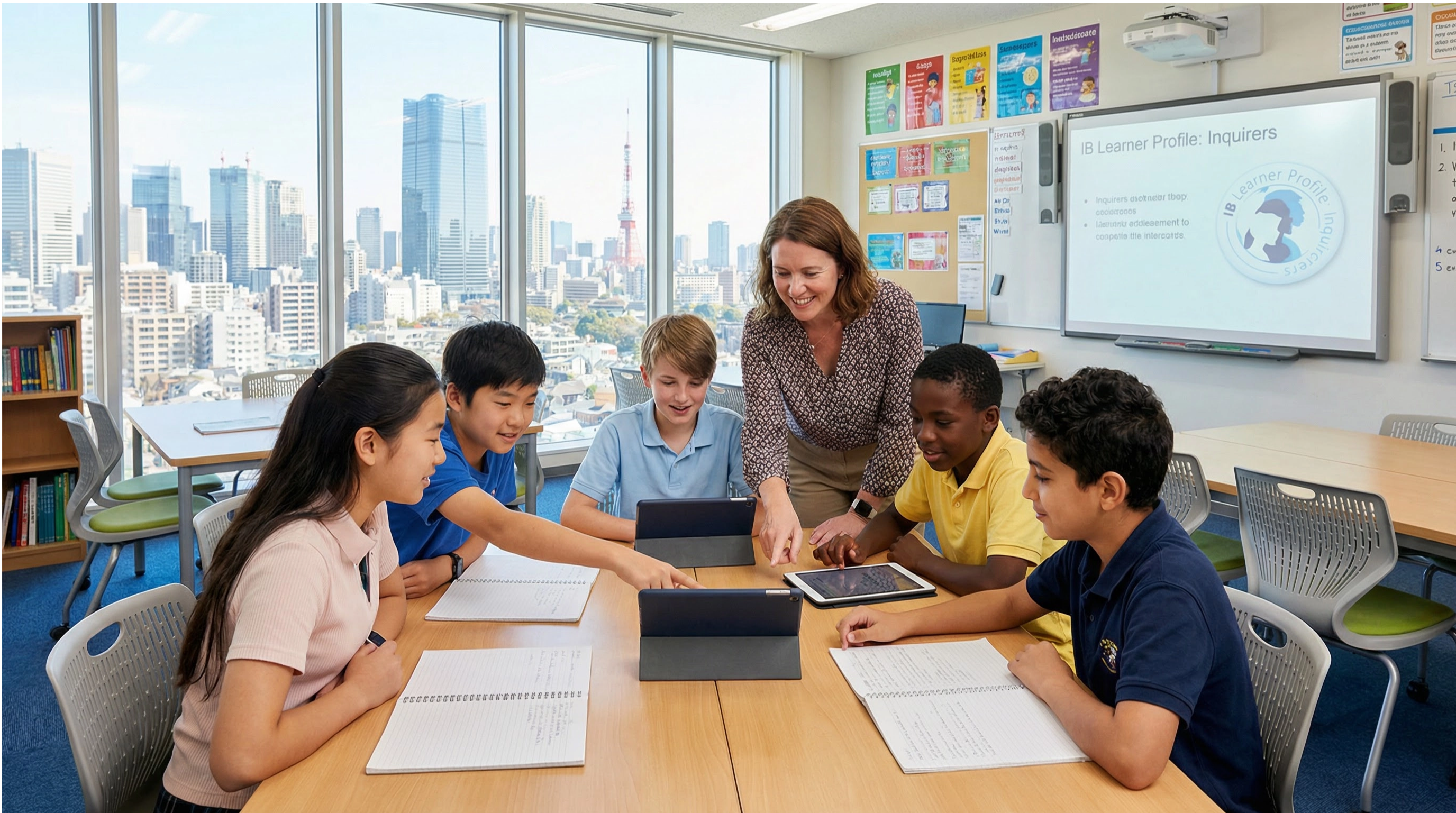
Understanding Capital Development Fees in Tokyo
Beyond tuition, the most significant financial hurdle for parents in Tokyo is the series of non-refundable, one-time fees required upon enrollment. These can add over $20,000 USD to your first-year costs per child, and they catch most families by surprise.
The Capital Development Fee is the largest and most unique cost, ranging from ¥900,000 to over ¥2,000,000 ($6,000 – $13,000+ USD). It is a mandatory, one-time contribution to the school's building and maintenance fund. This fee is particularly significant in Tokyo because most international schools do not receive government funding and rely entirely on tuition and these capital contributions to maintain their high-quality facilities.
Other one-time fees include:
- Registration Fee: A standard one-time fee of ¥300,000 to ¥500,000 ($2,000 – $3,300 USD).
- Application & Examination Fees: Smaller fees totaling around ¥80,000 to ¥100,000 ($500 – $650 USD).
When you're budgeting, make sure to request a full fee schedule from any school you are considering and explicitly ask about the total one-time cost for new students.
Best Expat Neighborhoods for International School Families
In Tokyo, your choice of neighborhood is inextricably linked to your choice of school. Most international schools are concentrated in a few key expat-friendly wards, and their bus routes determine the viable residential areas for families. The "Expat Bubble" is primarily centered around the following areas:
Minato-ku: The Heart of Tokyo's International Community
Neighborhoods like Hiroo, Azabu, and Roppongi are the undisputed heart of expat life in Tokyo. This ward has the highest concentration of international schools, English-speaking services (hospitals, supermarkets), and company-sponsored housing. For families seeking a seamless transition and a strong international community, this is the primary area to consider.
Shibuya-ku: Trendy and Family-Friendly
Adjacent to Minato, areas like Daikanyama and Yoyogi-Uehara are known for their trendy, family-friendly atmosphere. It offers a balance of modern living, green spaces like Yoyogi Park, and excellent connectivity to the school bus routes that service Minato-ku.
Setagaya-ku: More Space for Growing Families
For families seeking more space and a quieter, more residential lifestyle, Setagaya is a popular choice. Neighborhoods like Den-en-chofu and Futako-Tamagawa are home to several large-campus international schools and offer a more suburban feel while still being well-connected to the city center.
Meguro-ku: Stylish and Well-Connected
Known for its stylish boutiques and cherry-blossom-lined canals, neighborhoods like Nakameguro and Jiyugaoka are another popular choice for families. It is well-serviced by school bus routes connecting to institutions in both Minato and Setagaya.
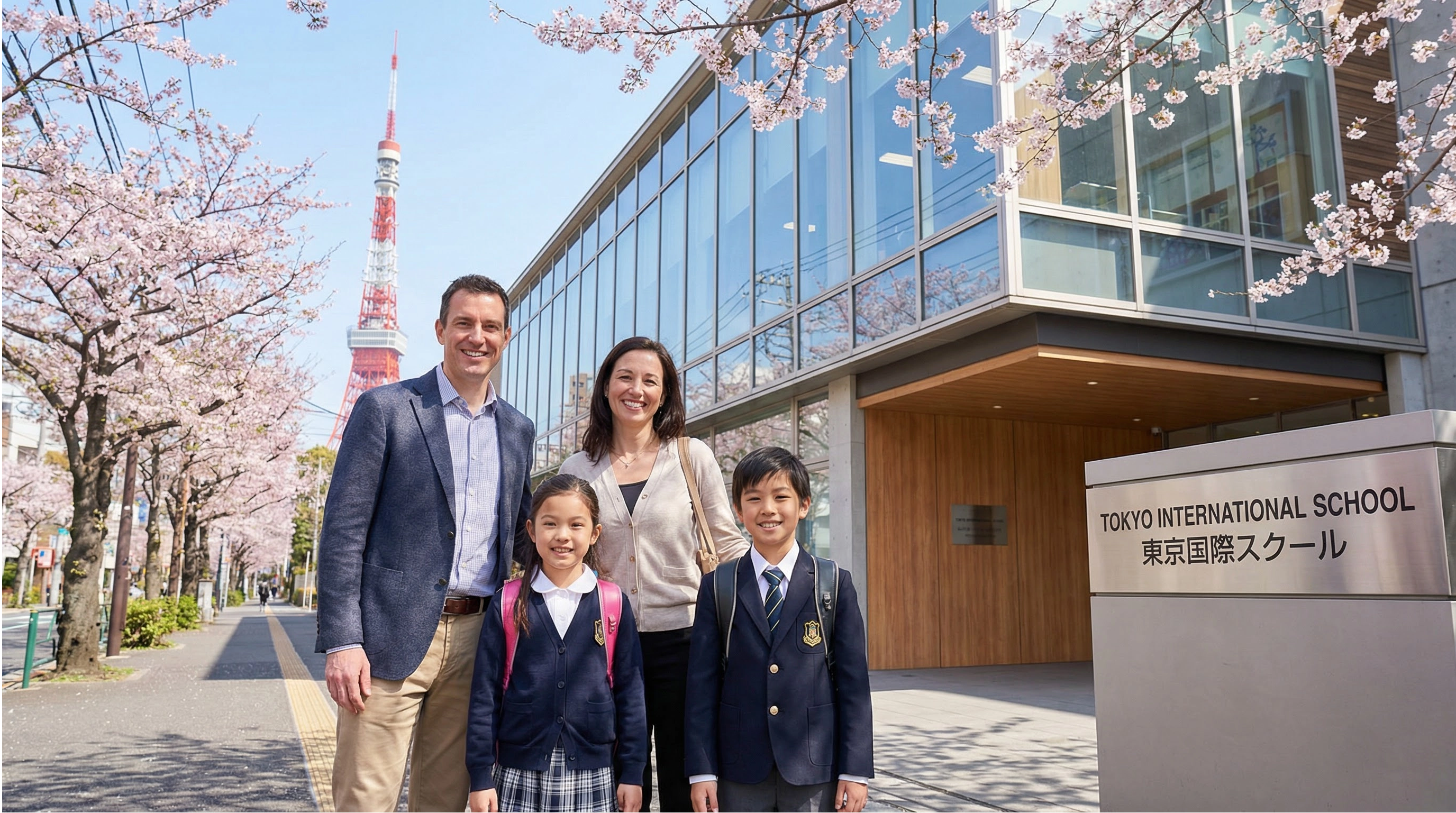
Balancing English Education with Japanese Language Learning
While Tokyo's international schools provide a world-class education in English, they can also create an "English Bubble" that limits a child's exposure to the local language and culture. For families who want their children to feel connected to their host country, it is important to consider a school's approach to Japanese language education.
When evaluating schools, ask about their "JSL" (Japanese as a Second Language) programs. The best programs are integrated into the daily school schedule and are differentiated to cater to all levels, from absolute beginners to those with some prior knowledge. Additionally, inquire about cultural exchange programs with local Japanese schools, which can provide invaluable opportunities for your child to practice their language skills and build friendships outside the expat community.
Ready to Explore Your Options?
Now that you have a strategic understanding of the international school system in Tokyo, you are equipped to begin your detailed research. Use this framework to identify the cost tier and neighborhood that best align with your family's budget and lifestyle. The next step is to explore the full range of options and request specific fee schedules and bus route maps from the schools that meet your criteria.
Frequently Asked Questions
What is the average cost of international schools in Tokyo?
The average annual tuition for mid-tier international schools in Tokyo ranges from $16,000 to $25,000 USD. However, premium schools can exceed $37,000 USD per year. It is crucial to factor in the one-time "Capital Development Fee," which can add an additional $6,000 to $13,000 USD to your first-year expenses.
Why are capital development fees so high in Tokyo?
This surprises most families, but capital development fees are a unique feature of the Tokyo market. They are used by schools to fund building maintenance and facility upgrades. As most international schools in Tokyo do not receive government funding, these non-refundable, one-time fees are essential for maintaining their high standards.
Which Tokyo neighborhood is best for families with school-aged children?
Minato-ku (specifically Hiroo and Azabu) is widely considered the best neighborhood for expat families due to its high density of international schools and English-speaking services. For families seeking more space and a quieter environment, Setagaya-ku is an excellent alternative that still offers strong connectivity to major schools.
Do international schools in Tokyo require Japanese language proficiency?
No, the primary language of instruction is English, and Japanese proficiency is not required for admission. However, most schools offer Japanese as a Second Language (JSL) programs to help students integrate into the local culture.
How far in advance should I apply to international schools in Tokyo?
Due to high demand and limited capacity, you should begin the application process 12 to 18 months before your intended start date. Many premium schools have extensive waitlists, especially for early primary years, so applying early is essential.