.svg)
 By
·
4 minute read
By
·
4 minute read
If you're relocating to Seoul with your family, you're probably wondering about international school costs and options. Here's what you need to know upfront: Seoul has 47 international schools offering three main curricula (IB, American, and British), with annual tuition ranging from $11,000 to over $52,000 depending on the school tier and your child's grade level. Most established schools fall in the $24,000-$43,000 range.
But choosing the right school isn't just about the price tag or the curriculum. It's about finding a community where your child will thrive, make genuine friendships, and feel supported while adjusting to life in a new country. This guide walks you through what really matters.
How Much Do International Schools Cost in Seoul?
Let's start with the most pressing question for many families: the cost. Seoul's international school fees are a significant investment, and it's important to understand the full picture beyond just the annual tuition. We've broken down the costs based on verified 2025-2026 data to give you a realistic budget.
Most schools fall into one of three tiers:
- Budget-Friendly Schools: These are often newer or smaller schools that offer recognized curricula at a more accessible price point. Expect annual tuition to be around $11,000 to $21,000 USD for primary and $15,000 to $26,000 USD for secondary.
- Mid-Tier Schools: These are well-established schools with strong facilities and a diverse range of programs. Annual tuition typically runs from $24,000 to $34,000 USD for primary and $36,000 to $43,000 USD for secondary.
- Premium Schools: These are elite, top-tier institutions with world-class facilities, extensive programs, and a track record of placing students in top universities. Annual tuition here can start at $36,000 USD and exceed $52,000 USD for secondary students.
The Hidden Costs of International Education in Seoul
It is crucial for parents to budget for more than just tuition. One-off and recurring fees can add a significant amount to your first-year costs. Be sure to inquire about:
- Registration & Enrolment Fees: A one-time charge that can range from $2,500 to over $8,000 USD (₩3.125M – ₩10M).
- Capital Development Fees: An annual or one-time fee used for campus maintenance and upgrades, often between $2,500 and $4,000 USD (₩3.125M – ₩5M) .
- Learning Support (EAL): If your child requires English as an Additional Language support, expect to pay an additional $4,000 to $12,000+ USD per year (₩5M – ₩15M+).
- Examination Fees: Fees for IB, AP, or IGCSE exams are typically not included in tuition and can amount to several thousand dollars per exam session.
Choosing Between IB, American, and British Curricula
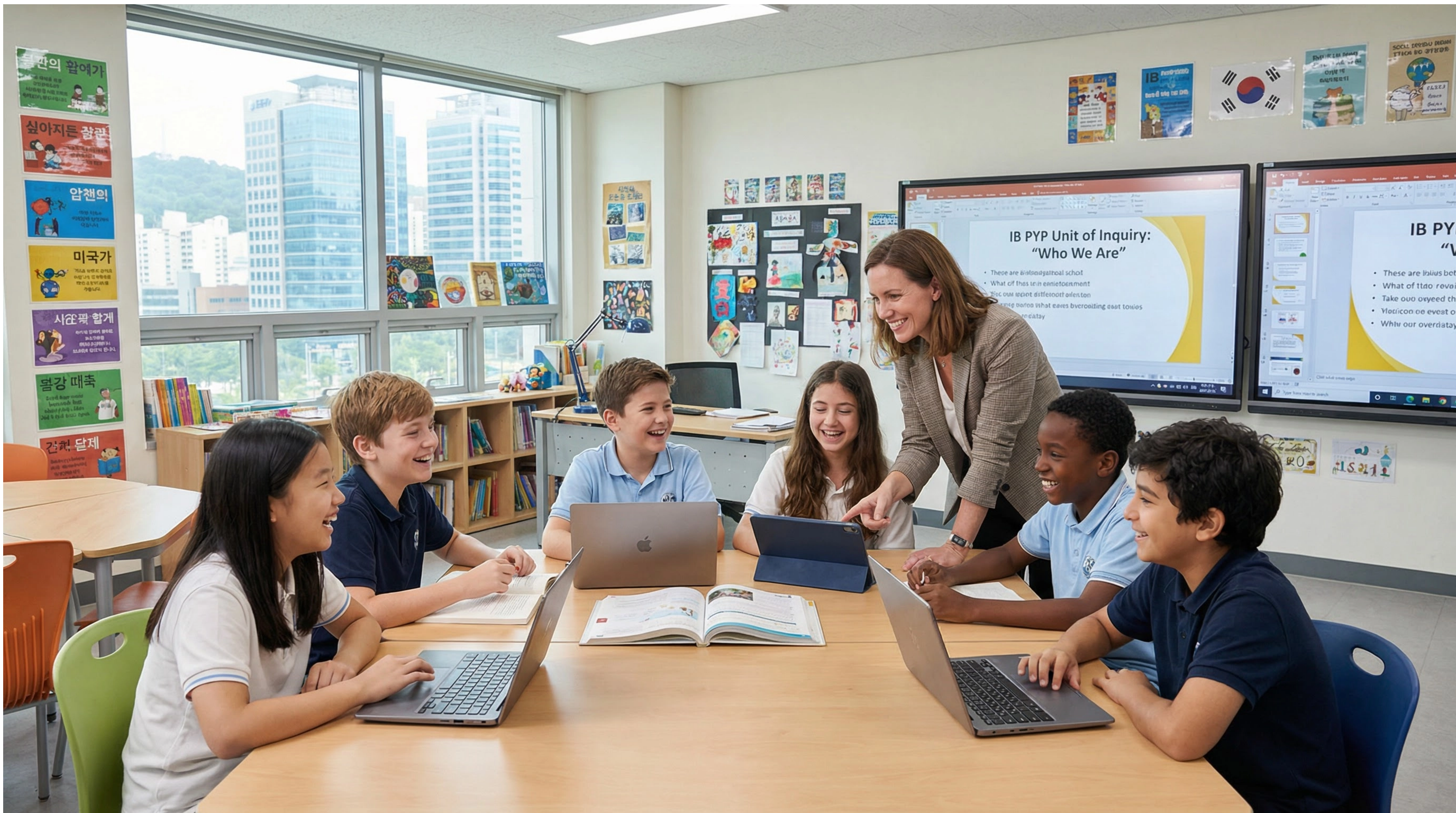
Seoul's international schools primarily offer three distinct educational paths. The right one for your family often depends on your child's learning style and your future plans.
- The International Baccalaureate (IB) Programme is a globally recognized framework that encourages critical thinking and independent research. It's offered as a full continuum (Primary Years, Middle Years, and Diploma Programme) and is a popular choice for globally mobile families because the IB Diploma is highly regarded by universities worldwide.
- The American Curriculum, based on U.S. standards, is ideal for families planning to eventually transition to the U.S. education system. It often culminates in Advanced Placement (AP) courses, which are college-level classes that can earn students university credit.
- The British Curriculum follows the National Curriculum for England, leading to IGCSE exams and then A-Levels. It's known for its depth and specialization, allowing students to focus on fewer subjects in more detail. This is a natural choice for families familiar with the British system.
Best Neighborhoods for International Schools in Seoul
Your choice of school is often tied to where you decide to live. Most of Seoul's international schools are clustered in a few key expat-friendly neighborhoods.
Yongsan District (Itaewon & Hannam-dong)
This is the traditional heart of Seoul's international community. It has a high concentration of American-curriculum schools and is perfect for families looking for a central, cosmopolitan lifestyle.
Gangnam & Seocho Districts
As major business hubs, these affluent districts are convenient and modern. They are home to several premium British and American curriculum schools, making them popular with corporate expat families.
Seodaemun District
For a quieter, more traditional Seoul experience, this residential area is home to some of the city's oldest and largest legacy international schools, often with more spacious campuses.
Global Education Cities (Songdo & Jeju)
If you're open to living outside of Seoul proper, the purpose-built cities of Songdo (near Incheon Airport) and Jeju Island host several premium boarding schools, often affiliated with prestigious international brands.
Mental Health and Wellbeing in Seoul International Schools
This is a topic that can't be overlooked. It's no secret that South Korea has a high-pressure academic culture, often called the "Hagwon" (private academy) culture. Many international school students also attend these after-school academies for extra instruction.
This intense focus on academics has a real impact. According to UNICEF, South Korea ranks in the bottom third of developed nations for child mental wellbeing. For parents, this is a critical factor to consider. When you evaluate schools, you need to look beyond just their academic results and ask the tough questions:
- What does your student support system look like? Ask about the student-to-counselor ratio and how accessible they are.
- Do you have a formal Social-Emotional Learning (SEL) curriculum? How is it integrated into the school day?
- How do you help students manage academic stress? What programs are in place to promote a healthy work-life balance?
Choosing a school that actively prioritizes mental health is just as important as choosing one with strong academics. It's essential for your child's long-term happiness and success.
Your Next Steps
Now that you have a clearer picture of the international school landscape in Seoul, you can start your detailed research. Use this guide to narrow down the curriculum, cost, and neighborhood that best fit your family's needs. The next step is to explore the schools that meet your criteria and start asking them the right questions.
Frequently Asked Questions
What is the average cost of international schools in Seoul?
The average annual tuition for mid-tier international schools in Seoul is typically between $24,000 and $34,000 USD for primary years. However, premium schools can exceed $50,000 USD per year. Remember to budget for one-off registration fees ($2,500–$8,000) and annual capital development fees ($2,500–$4,000).
Which curriculum is best for applying to US or UK universities?
For US universities, both the IB Diploma and the American curriculum (with AP courses) are highly regarded. For the UK, the British curriculum (A-Levels) or the IB Diploma are the most direct pathways. Most top-tier schools in Seoul have excellent university counselors who can guide your child.
Are there boarding schools in Seoul?
While most international schools in Seoul are day schools, you can find world-class boarding facilities in the Global Education Cities of Songdo (near Incheon) and Jeju Island. These are great options for families seeking a campus-based lifestyle.
How do I choose the right neighborhood?
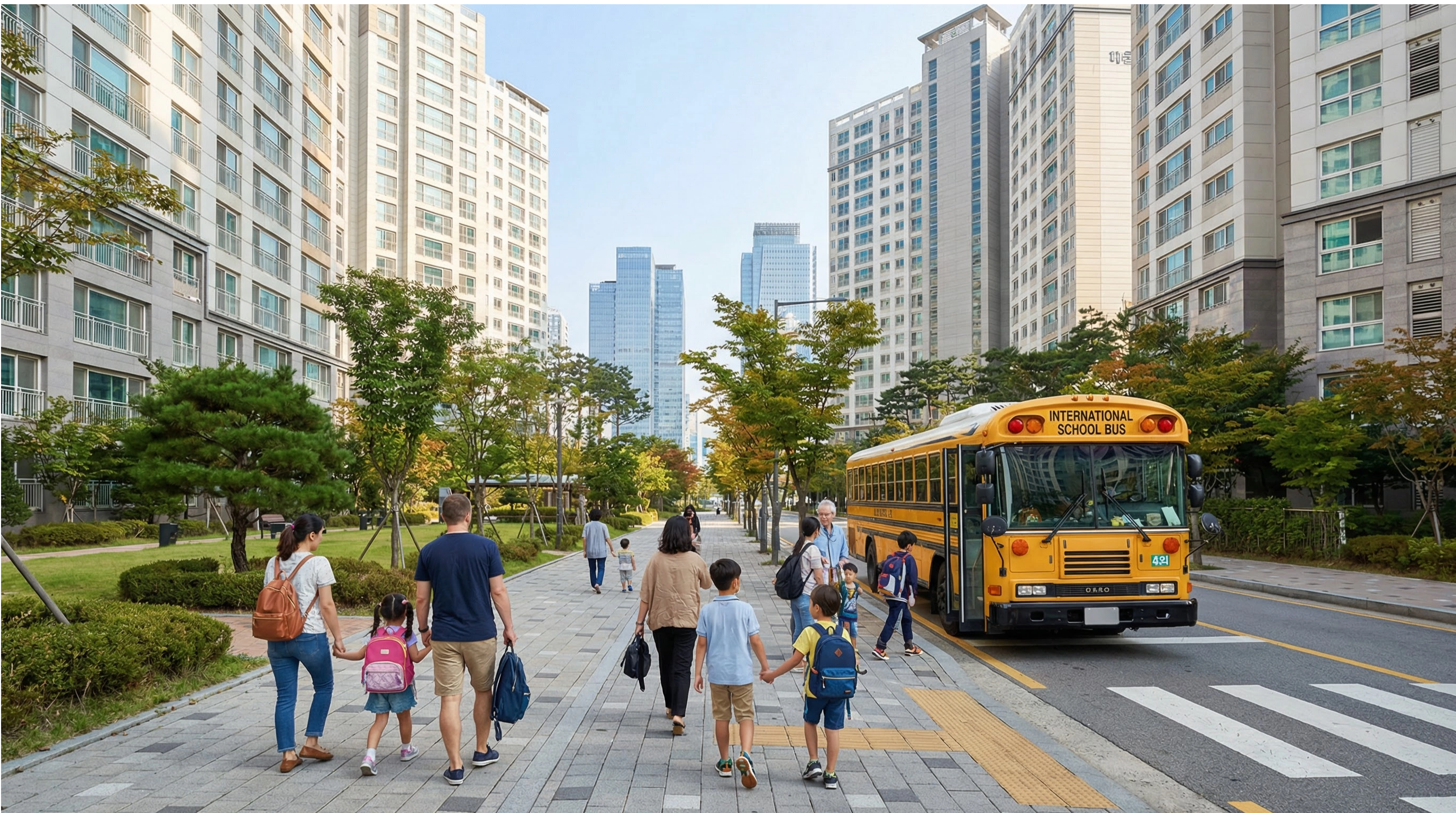
Most expat families choose Yongsan for its central location and international community. Gangnam and Seocho are great for those working in the business district. Before you decide on housing, always check the school's bus routes, Seoul's traffic can be a major factor in your daily commute.
How do schools in Seoul support student mental health?
Leading schools are very aware of the academic pressure in Korea. They integrate Social-Emotional Learning (SEL) into their curriculum and have dedicated teams of counselors. When you visit, ask specifically about their student support programs and how they help students manage stress.