---
title: When Does International School Start in South Korea? A 2027 Guide
description: Discover when international schools in South Korea start, key holidays, and tips for applying in 2027. Prepare your child's education journey today.
image: https://blog.doris.school/hubfs/south%20korea.jpg
---
[Skip to content](https://blog.doris.school/south-korea-international-school-start-dates#main-content)
[.svg)](https://tips.doris.school/)
- [Ask doris](https://tips.doris.school/chat)
- [Explore events](https://tips.doris.school/schools/events)
- [My shortlist](https://tips.doris.school/parent/dashboard/compare)
Open main navigation
Close main navigation
- [Ask doris](https://tips.doris.school/chat)
- [Explore events](https://tips.doris.school/schools/events)
- [My shortlist](https://tips.doris.school/parent/dashboard/compare)
- [Find schools](https://tips.doris.school/schools)
[Find schools](https://tips.doris.school/schools)
[All posts](https://www.doris.school/international-school-guide)
September 10, 2026
# When Does International School Start in South Korea? A 2027 Guide
-1.png?width=50&name=Team%20pics%20(2)-1.png) By Aziza F · 3 minute read
Most international schools in South Korea begin their academic year in August, running through to June, unlike Korean public schools, which start in March and finish the following February. It's a genuine mismatch, similar to Japan's, and one of the first things families relocating to Seoul need to get their heads around.
For 2027 to 2028, expect a similar shape, though exact dates are usually confirmed only around 12 months out, so check with any school on your shortlist closer to the time.
[](https://blog.doris.school/hs/cta/wi/redirect?encryptedPayload=AVxigLLP7PbL8yxYLi6d00WV4OO3H%2F5VKa9KG8xBPuxu3c0IrVIwO6p72PYftEGjm5iNEhMWUNMmhzbIcRb64Agud9Wn86pRUbsndPEjMrn%2FBdcDXYJNRPYoXAEpQEE3NYvbsE4hlm2%2BaiIFlp4bD%2FEBhXbuvqvAt%2BOv%2F04wyC3i6inzZb6gd6b8tSmSiTGgRkCIwclNPR%2FNXkMc2eBOLrBBi9%2Fza37Ggg%3D%3D&webInteractiveContentId=375182407870&portalId=145372008)
## Why the dates are different from local schools
Korean public schools run two semesters, March to mid July and late August to February, with a short summer break and a longer winter break either side of the Lunar New Year. This March start has a specific history, Korea briefly used a September start under the US military government after 1945, then switched to March in 1962 to align the school year with the national fiscal year and the coldest months with winter break. International schools didn't inherit this, they run the northern hemisphere calendar tied to their curriculum instead, British schools in three terms with an October half term, American and IB schools in two semesters with the IB Diploma exam season in May.
## Term dates and key holidays
Within the August-to-June school year, you can generally expect:
- **Christmas break:** Around two weeks in late December and early January.
- **Spring break:** Usually around late March, though dates vary by school.
- **Summer break:** The longest holiday falls in summer, typically from June or July until August.
- **Korean public holidays:** Both Korean and international schools observe Seollal (Lunar New Year) and Chuseok, even when their academic calendars differ.
- **Plan ahead:** Check your school’s calendar for exact term dates and holiday closures before booking travel.
[](https://blog.doris.school/hs/cta/wi/redirect?encryptedPayload=AVxigLLgGaucV0%2BNuqUjz5zDtTTta3PN7%2FPqck78%2Fa2g8nU2wT1imJlDR5pmto%2B9XPw9sAiAcPXKEo5OK7DnnP%2Fn4z1lc0KwIR9zDNsS%2BZa8K%2FfABsOUIemNp8lsNvmZ5m5XpUB2y6p3pWiIm7R2h4XYSh%2BxPrguuBeuLUQYxQJasQFWKoFjaU5L3YHOKRYOJdW5pDQn9RLPnONoF08eolhcmawJQtQ2%2Fw%3D%3D&webInteractiveContentId=375200190671&portalId=145372008)
## What to prepare, and from when
| When | What to do |
| --- | --- |
| 12 months before | Shortlist schools and check space in your child's year group, popular Seoul schools fill early |
| 9 to 10 months before | Visit or tour virtually, and start the application, most schools want school reports and immunisation records |
| 6 months before | Confirm the offer, pay the deposit, and ask about support for non-Korean speakers |
| 2 to 3 months before | Sort uniform and transport, and confirm the exact start date with the school |
## [](https://tips.doris.school/schools/south-korea)
## Five popular international schools in South Korea

**[Seoul Foreign School](https://tips.doris.school/schools/south-korea/seoul-foreign-school)**, Seoul. IB continuum alongside a British curriculum stream, ages 2 to 18, around 1,500 pupils. KRW 37,612,549 to 52,279,697 a year (approx. USD 25,900 to 36,000).
**[Chadwick International School](https://tips.doris.school/schools/south-korea/chadwick-international-school)**, Songdo, Incheon. Full IB continuum including the Career Programme, ages 4 to 18, around 1,500 pupils. KRW 51,591,690 to 60,197,655 a year (approx. USD 35,500 to 41,400).
**[Dulwich College Seoul](https://tips.doris.school/schools/south-korea/dulwich-college-seoul)**, Seocho, Seoul. British curriculum to IGCSE and IB Diploma, ages 3 to 18, around 700 pupils. KRW 40,700,000 to 44,800,000 a year (approx. USD 28,000 to 30,800). Holds a New Families Welcome Day each August.
**[Seoul International School](https://tips.doris.school/schools/south-korea/seoul-international-school)**, Seongnam, Gyeonggi-do. American curriculum with AP courses, ages 3 to 18, around 800 pupils. KRW 31,991,809 to 39,374,690 a year (approx. USD 22,000 to 27,100).
**[Korea International School, Seoul Campus](https://tips.doris.school/schools/south-korea/korea-international-school-seoul)**, Gangnam, Seoul. American curriculum with a Reggio-inspired early years programme, ages 3 to 11. KRW 18,850,000 to 21,090,000 a year (approx. USD 13,000 to 14,500).
Schools shown for informational purposes only. doris does not rank or promote any school.
[](https://blog.doris.school/hs/cta/wi/redirect?encryptedPayload=AVxigLLP7PbL8yxYLi6d00WV4OO3H%2F5VKa9KG8xBPuxu3c0IrVIwO6p72PYftEGjm5iNEhMWUNMmhzbIcRb64Agud9Wn86pRUbsndPEjMrn%2FBdcDXYJNRPYoXAEpQEE3NYvbsE4hlm2%2BaiIFlp4bD%2FEBhXbuvqvAt%2BOv%2F04wyC3i6inzZb6gd6b8tSmSiTGgRkCIwclNPR%2FNXkMc2eBOLrBBi9%2Fza37Ggg%3D%3D&webInteractiveContentId=375182407870&portalId=145372008)
## Check school availability in South Korea on doris
Schools in South Korea may have waiting lists for certain year groups, so it helps to prepare well ahead of your preferred start date.
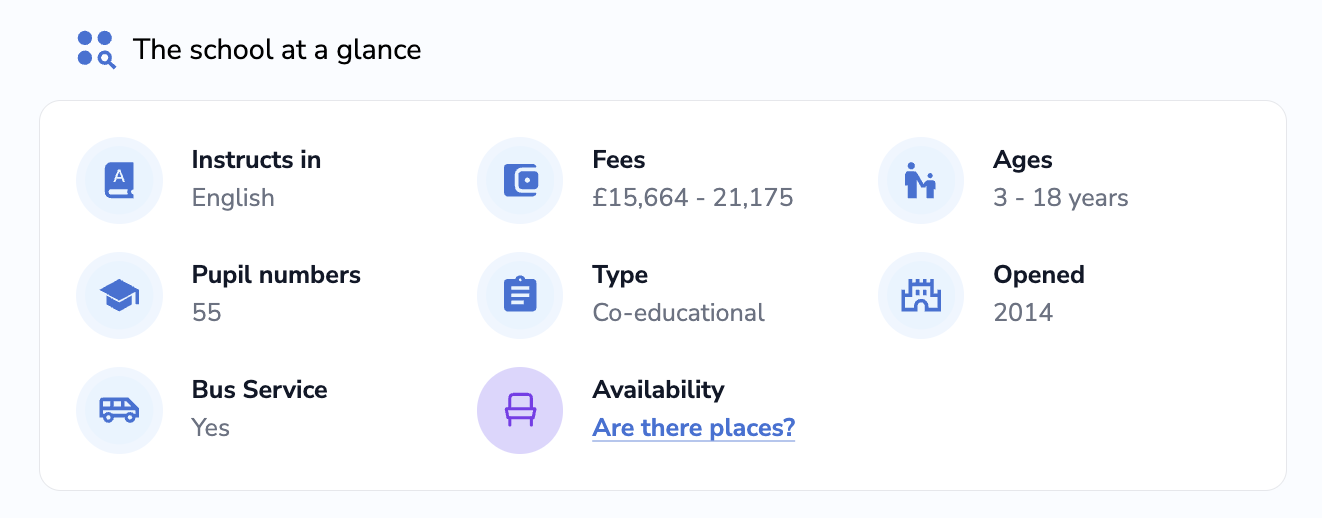
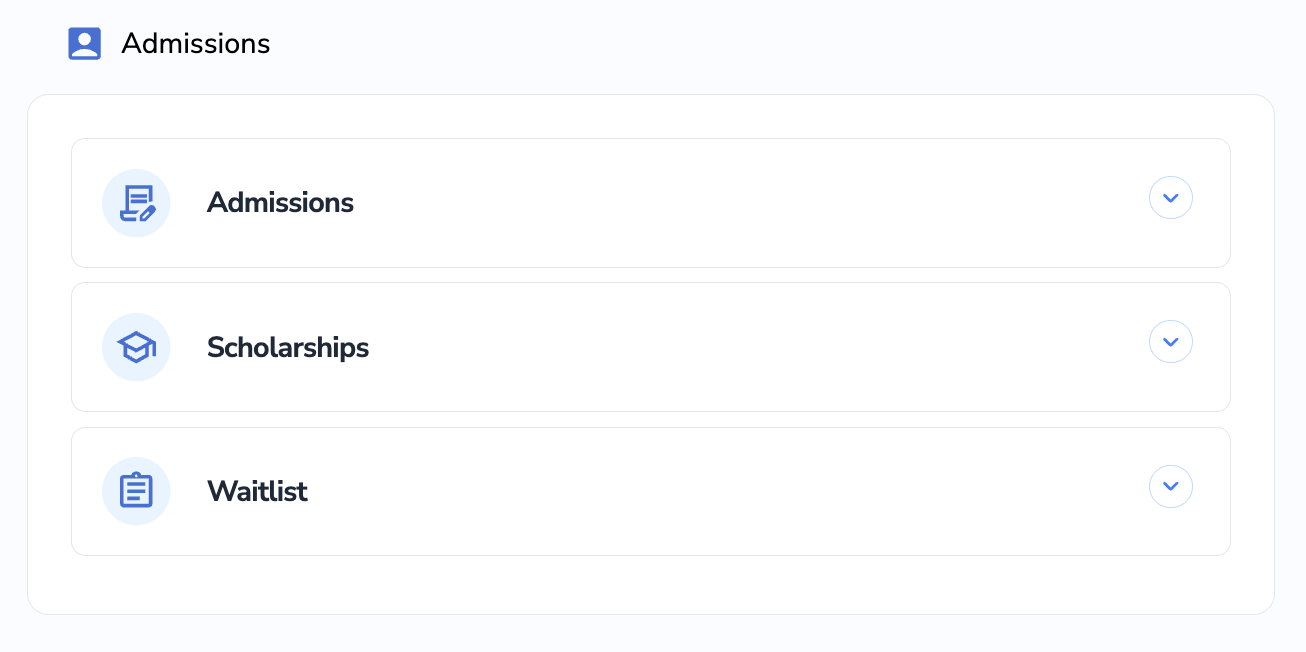
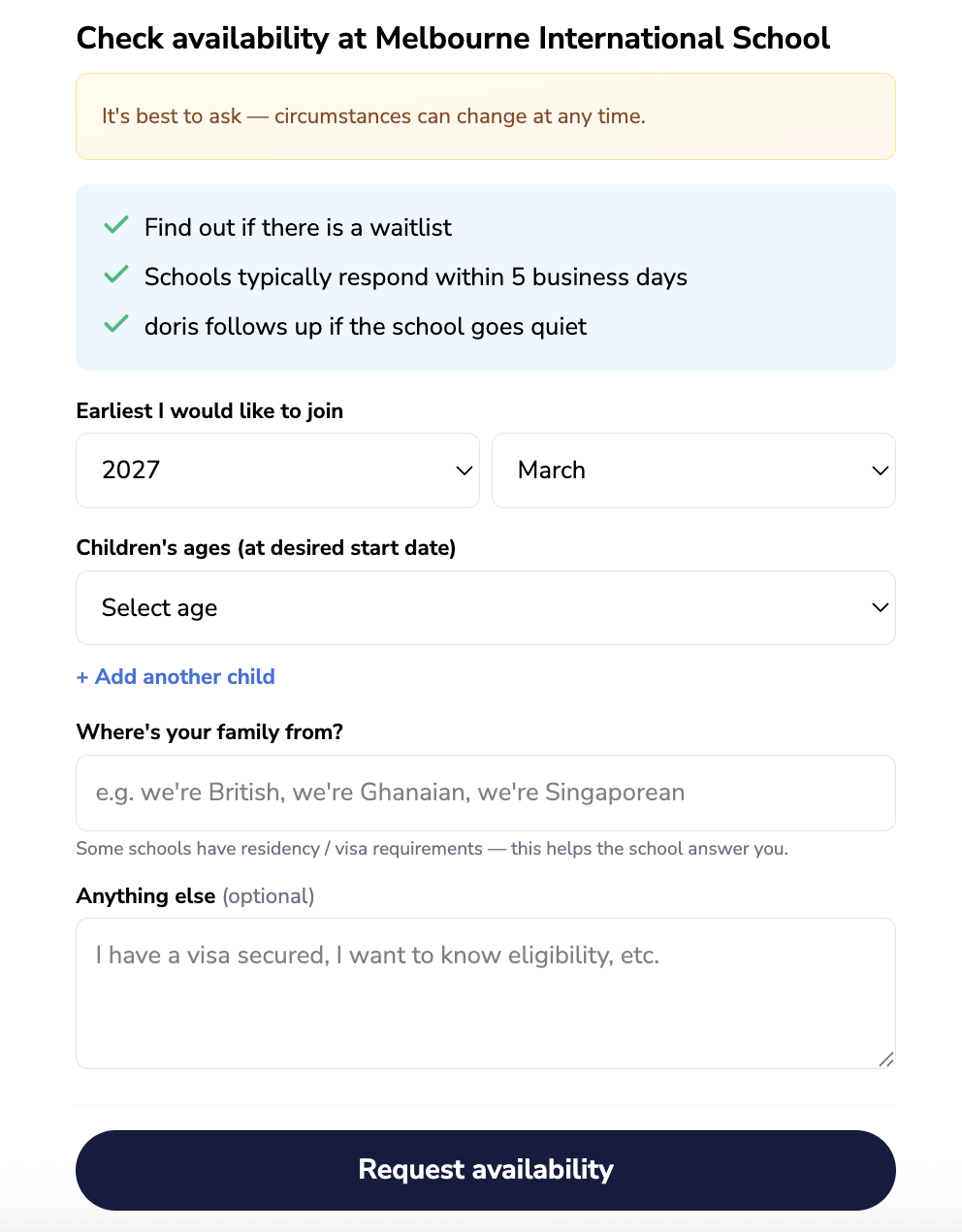
Start by exploring schools in South Korea on doris and opening the profiles of those on your shortlist. You can review admissions details and, where available, check availability or send an enquiry to ask about places, waiting lists and application requirements. Include your child’s age and intended start date so the school can give you relevant guidance.
[](https://blog.doris.school/hs/cta/wi/redirect?encryptedPayload=AVxigLLgGaucV0%2BNuqUjz5zDtTTta3PN7%2FPqck78%2Fa2g8nU2wT1imJlDR5pmto%2B9XPw9sAiAcPXKEo5OK7DnnP%2Fn4z1lc0KwIR9zDNsS%2BZa8K%2FfABsOUIemNp8lsNvmZ5m5XpUB2y6p3pWiIm7R2h4XYSh%2BxPrguuBeuLUQYxQJasQFWKoFjaU5L3YHOKRYOJdW5pDQn9RLPnONoF08eolhcmawJQtQ2%2Fw%3D%3D&webInteractiveContentId=375200190671&portalId=145372008)
Start your school search early to give your family more time to explore options and prepare your application.
[](https://blog.doris.school/hs/cta/wi/redirect?encryptedPayload=AVxigLJ45nb9uV6%2BVqdOaJn8oiba8kXf%2BkzgdPCKEPnQcPSa8NrOyQYti0TQtROJRVQXOhIJBQip0gEYH2xHk9VHQj6fGIXGqRwPtKI3ltWz5xjMZyinGgbKFbt3X4PqYeoomfeiI%2BoVqqXOVeLoOrMdPUrz2HDWII%2FpApBSaGRM5CEBbdXR11S9w5dbCUNbvEGvVTwQNYjYjavw14QOA5%2FujL%2Bs&webInteractiveContentId=374427706561&portalId=145372008)
## FAQ
**What month does international school usually start in South Korea?** Local schools start in March. International schools follow a different calendar and typically start in August.
**What are the term dates for schools in South Korea?** Korean public schools run two semesters, March to mid July and late August to February. International schools generally run August to June, either two semesters or three terms depending on curriculum.
**Does the international school year in South Korea match the local school year?** No. They share Lunar New Year and Chuseok as public holidays, but the term structure and academic year run on entirely different calendars.
**When should we start applying for a 2027 start in South Korea?** Around 12 months ahead, particularly for younger year groups at popular Seoul schools where places go quickly.
**Why does the Korean school year start in March?** Korea switched from a September start to March in 1962 to align the academic year with the national fiscal year and keep winter break over the coldest months.
doris is a free, impartial international school discovery platform designed to help parents find the right international school for their children worldwide. Every school profile includes fees, curriculum, admissions, pupil numbers and more. Parents can compare schools, contact schools directly, access expert parent guides, and connect with a community of parents around the world. Start your search at doris.school.
This guide was written by Aziza F, part of the doris editorial team. doris sources school data from institutions worldwide and speaks directly with parents navigating the school search process. Fee data reflects published and publicly available information for the 2026 to 2027 academic year and is reviewed annually. External sources: school academic calendars and fee pages, South Korea Ministry of Education.
Schools are listed for informational purposes only. doris does not rank or promote any school.
## Featured posts
Share [facebook-f icon](http://www.facebook.com/share.php?u=https://blog.doris.school/south-korea-international-school-start-dates) [linkedin-in icon](http://www.linkedin.com/shareArticle?mini=true&url=https://blog.doris.school/south-korea-international-school-start-dates) [twitter icon](https://twitter.com/intent/tweet?url=https://blog.doris.school/south-korea-international-school-start-dates) [pinterest-p icon](http://pinterest.com/pin/create/link/?url=https://blog.doris.school/south-korea-international-school-start-dates) [envelope icon](mailto:?body=https://blog.doris.school/south-korea-international-school-start-dates)
[.svg "doris-logo-dark (1)")](http://doris.school)
[facebook-f icon](https://www.facebook.com/doris.school/) [linkedin-in icon](https://www.linkedin.com/company/91639588/admin/dashboard/) [youtube icon](https://youtube.com/@dorisschool?si=i-IRKerbVnHd0vLi) [instagram icon](https://www.instagram.com/doris.school/)
**Learn more**
[About doris](https://tips.doris.school/about)
[Parent Guide](https://tips.doris.school/international-school-guide)
[Transparency Charter](https://tips.doris.school/transparency-charter)
© 2026 doris Worldwide Ltd. All rights reserved.
```json
{
"@context" : "https://schema.org",
"@type" : "BlogPosting",
"author" : {
"@type" : "Person",
"name" : "Aziza F",
"url" : "https://blog.doris.school/author/aziza-f"
},
"dateModified" : "2026-09-10T23:45:00.004Z",
"datePublished" : "2026-09-10T23:45:00.000Z",
"headline" : "When Does International School Start in South Korea? A 2027 Guide",
"image" : [ "https://blog.doris.school/hubfs/south%20korea.jpg" ],
"mainEntityOfPage" : {
"@id" : "https://blog.doris.school/south-korea-international-school-start-dates",
"@type" : "WebPage"
},
"publisher" : {
"@type" : "Organization",
"logo" : {
"@type" : "ImageObject",
"url" : "https://blog.doris.school/hubfs/doris_logo_dark%20(1).png"
}
}
}
```
```json
{
"@context" : "http://schema.org",
"@type" : "Article",
"author" : {
"@type" : "Person",
"name" : [ "Aziza F" ]
},
"datePublished" : "2026-09-10T23:45:00+0000",
"description" : "Discover when international schools in South Korea start, key holidays, and tips for applying in 2027. Prepare your child's education journey today.",
"headline" : "When Does International School Start in South Korea? A 2027 Guide",
"image" : "https://145372008.fs1.hubspotusercontent-eu1.net/hubfs/145372008/south%20korea.jpg",
"publisher" : {
"@type" : "Organization",
"logo" : {
"@type" : "ImageObject",
"url" : "https://145372008.fs1.hubspotusercontent-eu1.net/hubfs/145372008/doris_logo_dark%20(1).png"
},
"name" : "Doris Worldwide Ltd"
},
"url" : "https://blog.doris.school/south-korea-international-school-start-dates"
}
```