.svg)
 By
·
10 minute read
By
·
10 minute read
This blog has been updated in September 2026
If you have been looking at early years international school options in Singapore for your children, chances are you've run into the phrase "play-based learning."
And if you're a parent who grew up with worksheets and spelling tests, it can feel unfamiliar. You might be asking yourself: where's the actual learning? When does my child start reading? How much can children truly learn through play?
The good news is that play-based learning is not a soft alternative to "real" education. It's one of the most thoroughly researched approaches in early childhood development, and there’s academic evidence that shows it’s effective when executed well.
In this article, we'll cover what the research says, what the main approaches look like in practice, and what to pay attention to when you visit a school.
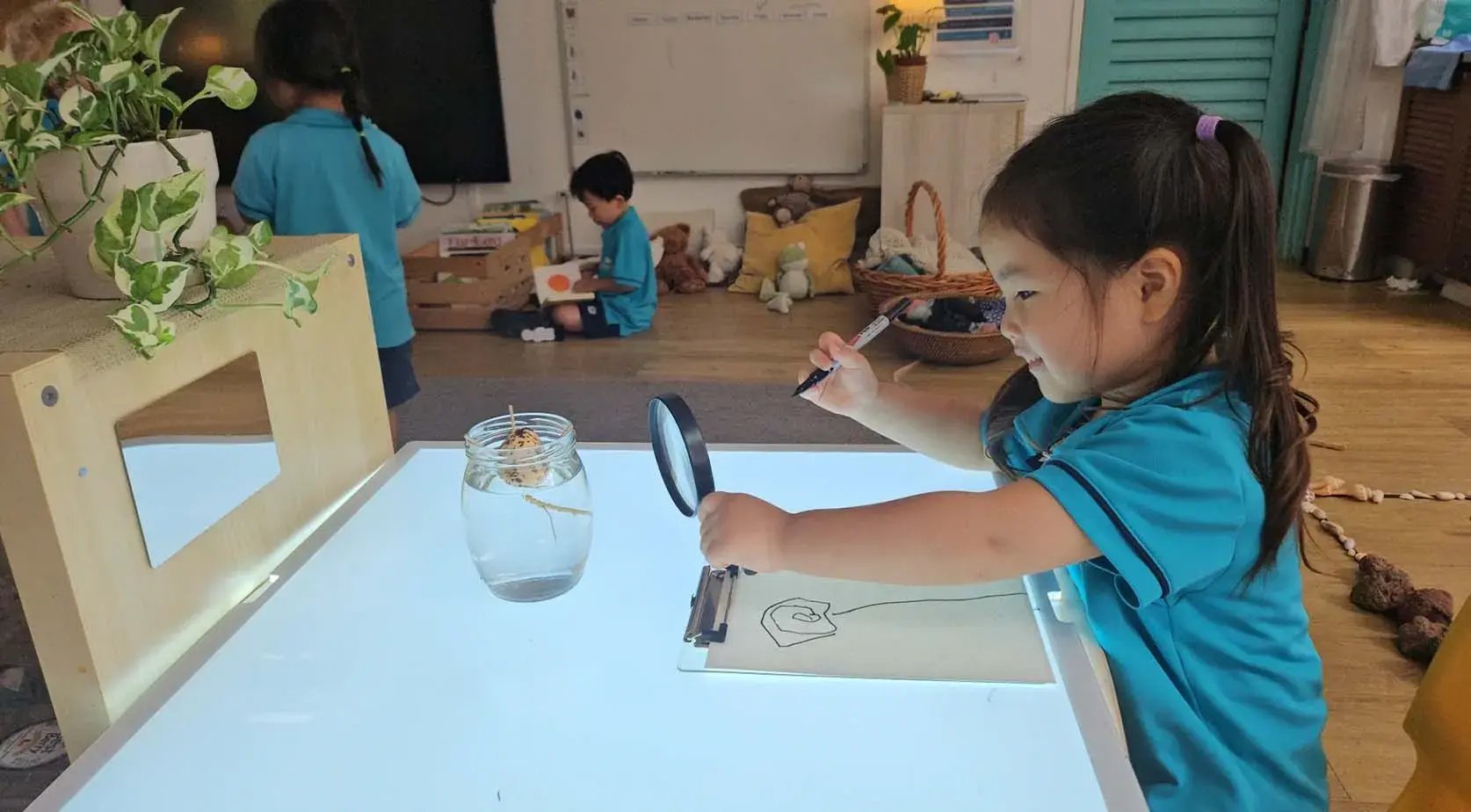
Play-based learning: a child learning about plants at Dover Court International School, Singapore,
The science behind play-based learning
Before we get into the research, it's worth being clear about what "play" actually means in an early years context, because it can be different from what most adults picture when they hear the word.
Play here doesn't mean children being left to their own devices with a pile of toys. It means exploring, investigating, asking questions and testing ideas, often with an adult nearby who's gently shaping the experience towards a learning goal.
Stacking wooden blocks might look like a fairly basic activity, but there's a lot going on underneath. Children are working out why the tower keeps toppling when the big block goes on top of the small one, counting each new piece as they add it, naming the colours they reach for, and negotiating with the child next to them when there's only one red block left. A teacher watching closely will know when to step in with a question that extends the thinking, and when to step back and let them figure it out on their own.
This is why play and learning aren't opposites. For young children, play is how learning happens. When a four-year-old builds a tower with another child or pretends to run a shop, they're working on spatial reasoning, language, self-regulation, social problem-solving and early maths all at once. It's a good thing they do, because these early skills are far harder to build when they're older.
The Effective Pre-school, Primary and Secondary Education project, a study that followed more than 3,000 children in the UK from age three into their teens, found that:
- The quality of early years provision has measurable effects on children's academic and social outcomes years
- School settings that balance child-initiated play with adult-guided learning produce the strongest results.
- Children who do best are the ones who experience rich, play-led experiences alongside skilled adult interaction. Not only do they enjoy better outcomes than the ones pushed into formal academics earlier, but the effects are still visible several years later, even as teens.
What makes the EPPE findings particularly useful for parents is that the researchers were able to identify what "high quality" meant in practice. It came down to the warmth and skill of the adults, the balance between child-led exploration and gentle adult guidance, and the richness of the interactions children had during their play. Those elements travel across approaches and price points, regardless of individual schools' facilities, branding and propositions.
Cambridge researcher David Whitebread, whose report on the importance of play has shaped early years policy across Europe, states it clearly: there is no good evidence that starting formal instruction earlier produces better long-term outcomes, and a fair bit of evidence suggesting the opposite.
Children who are rushed into reading and writing before they're developmentally ready can show short-term gains, but they fade by age seven or eight. On the other hand, children who built strong oral language, motor and social foundations through play overtake them in the long run.
A 2018 clinical report from the American Academy of Pediatrics, “The Power of Play”, co-authored by a team of paediatricians and developmental researchers, goes even further. It identifies play as essential to healthy brain development and recommends that paediatricians prescribe play to parents as a way of protecting children against stress and supporting cognitive, social and emotional growth.
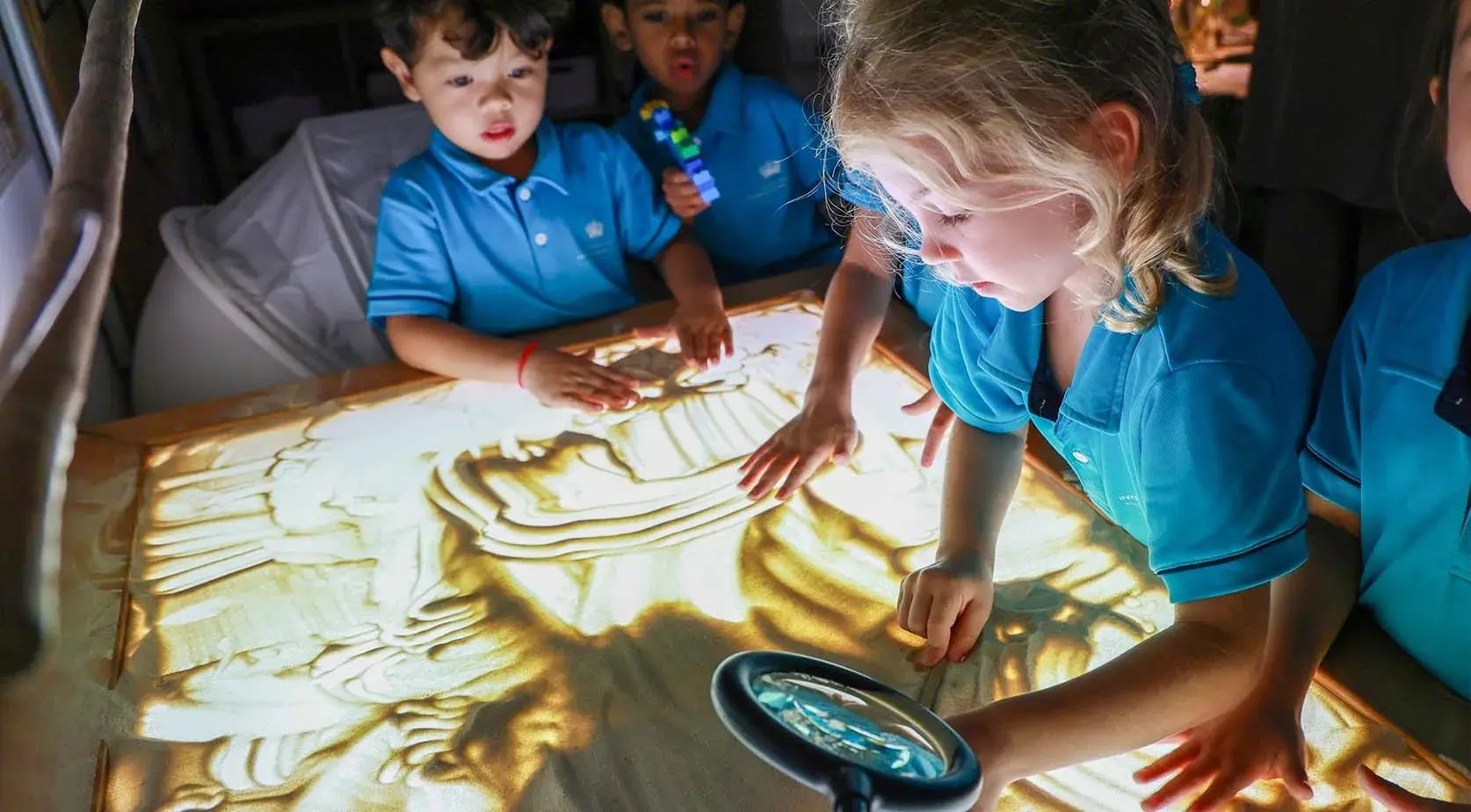
Balance child-initiated play with adult-guided learning leads to strong long-term outcomes (image: Dover Court International School)
The main approaches you'll come across in international schools in Singapore
Once you understand why play-based learning is effective in supporting children's outcomes, the next step is navigating its different approaches. And there are several. Here are some of the most common and popular in Singapore, as in many other countries.
- Montessori settings emphasise independence and self-directed activity within a carefully prepared environment. Children choose from a range of materials designed to develop specific skills, and teachers observe and guide rather than instruct. There's structure, but the learning sits in the environment itself more than the timetable.
- Reggio Emilia, originally developed in northern Italy after the Second World War, treat children as capable and curious researchers. Learning emerges from children's individual interests, often through long-term projects. In these settings, the environment is considered the "third teacher" alongside the adults and the children themselves. Reggio Emilia places a strong emphasis on creative expression, documentation of children's thinking, and relationships.
- Forest School and outdoor learning approaches, as the name suggests, originated in Scandinavia and use natural environments as the primary learning space. Children spend significant time outdoors in all weathers, building, exploring, taking measured risks and developing physical confidence alongside other skills.
- Blended models aren't all-in on one specific approach, but borrow elements from several of them. For example, they might draw on Reggio's project-based ethos, Montessori's structured independence, and outdoor learning's emphasis on physical exploration.
None of these are better or worse than the others. What matters is what fits your child's specific needs and personality, and whether the approach is implemented deliberately and consistently.
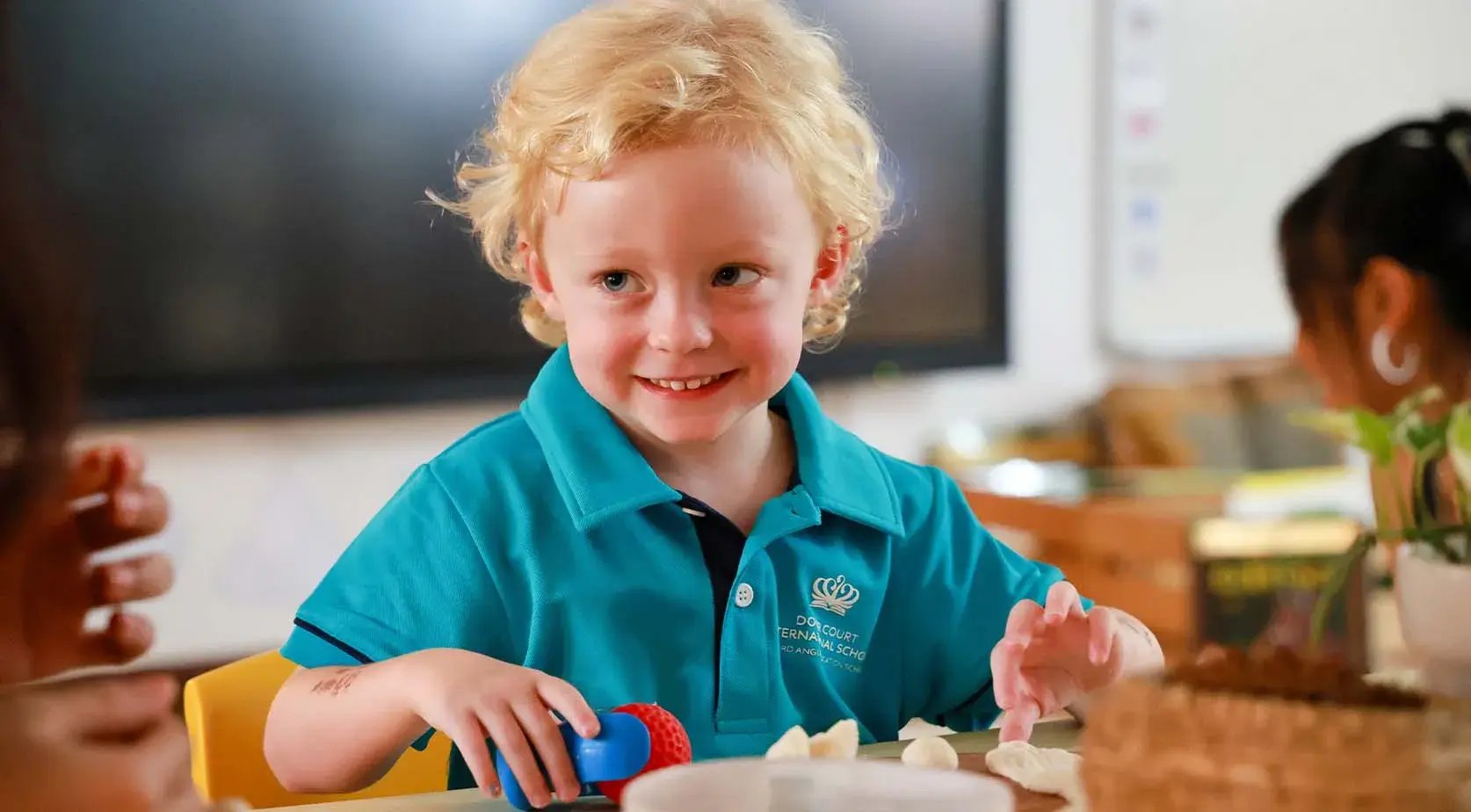
Student engaged in play-based shapes and maths activity
When do children learn to read and write in a play-based school?
Children in strong play-based settings do learn to read and write. Formal instruction usually starts between ages five and six, once the groundwork is in place.
The research is clear that early literacy and numeracy develop best when they're built on strong oral language, rich vocabulary, and the cognitive and social foundations that play-based settings are designed to grow. Children who can hold a conversation, take turns, focus their attention, recognise patterns and tell a story are children who are ready to read and write when the time comes. Pushing children into formal lessons too soon can lead to them sounding out words without really understanding them (and disliking school in the process).
While you won't see four-year-olds sitting at a desk doing handwriting drills, effective play-based schools weave letters and numbers into everyday activities, encouraging children to recognise their names, count things that matter to them, and play with sounds and rhymes.
If a school can't articulate how its play-based approach builds the foundations for formal learning later on, that's a problem. If it can, that’s a good sign.
What to look for when you visit a school
A school's marketing material will cover a school’s approach extensively, but it can only say so much. The real test is what you see and feel when you walk in for the first time.
Here's what to look for on a tour, and what each of these things tells you.
-
Watch the children before you watch the adults. Are they engaged in what they're doing, or drifting? Do they approach you spontaneously, smiling and waving, or do they keep to themselves and only speak when asked? Confident, happy children who aren't shy around unfamiliar visitors usually signal an environment that's warm and trusting of children's own choices. A green flag.
-
Notice how the adults interact with the children. Research from Kathy Hirsh-Pasek and Roberta Golinkoff on guided play shows that the quality of adult-child interaction matters enormously. Look for adults who are kneeling down to a child's level, asking open questions, and following the child's lead rather than directing the activity.
-
Look at the space. Is it cluttered with plastic toys, or thoughtfully arranged with materials children can use? Is there evidence of children's work around you (as in, slightly messy, in-progress thinking, not laminated displays made by teachers?) Are there dedicated spaces for quiet time, for movement, for making, for being outdoors? The Reggio tradition talks about the environment as the "third teacher" for a reason: a well-designed early years space does a lot of the educational work on its own. It’s worth noting that spaces should give children both room to move and build when they have the energy, and a calmer corner to retreat to when they have had enough or want a bit of a sensory break.
-
See what happens outside. How much time do children spend out there? Is the outdoor space treated as an extension of the classroom, or as somewhere to burn off energy between "real" lessons? You'll want to spot signs of the former, especially in a hot country like Singapore. Schools that take outdoor learning seriously have figured out how to make it work in the heat, and the children are visibly better for it.
-
Pay attention to transitions between activities. Rushed and slightly anxious transitions often signal an over-scheduled day. Calm, purposeful ones suggest the staff trust the children and the children trust the rhythm.
-
Ask staff how they handle the move into formal learning. A good early years setting will be able to explain how children build the foundations for reading, writing and maths through play, and how that transitions into more structured learning as they get older. You should be looking for concrete answers with specific examples of what children are doing and why.
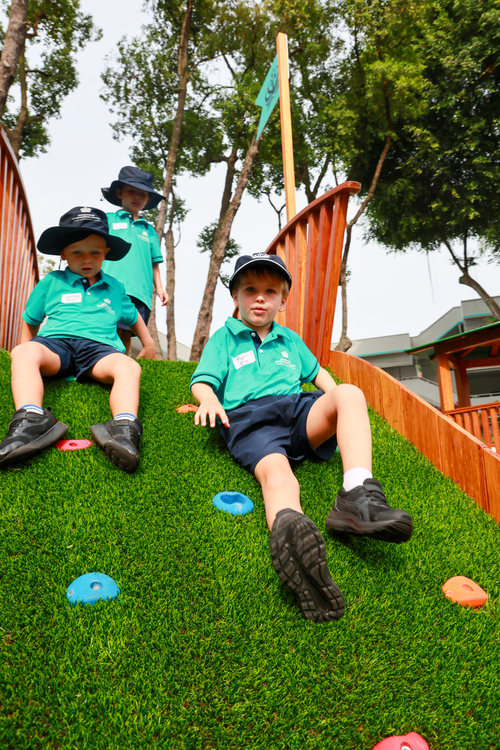
A good sign: outdoor spaces as an extension of the classroom (Dover Court International School)
Seeing it in practice: Dover Court International School
To write this article, we drew on conversations with Dover Court International School (DCIS), Singapore and looked closely at how their early years setting, the NEST programme (short for Nurturing Early Stages Together), brings the Reggio philosophy and ""good" play-based learning to life in practice.
Luna Deller, Deputy Head of Lower Primary (nursery to Year 2), explains that play is how children make sense of the world around them. The early years curriculum sits alongside an environment deliberately set up for exploration, where what looks like simple play is carefully planned to support learning.
A lot of the principles we've talked about so far show up in the way the programme is set up. There are dedicated early years spaces and studios built for creative exploration, which echoes the Reggio idea of the environment as the "third teacher." Outdoor space is treated as part of the classroom. In the outdoor atelier and garden patch, children build, watch water flow, handle leaves and soil, and care for the young plants in the school's nursery. They also head out as explorers, spotting birds and other animals at the local park, even in Singapore's hot climate.
The newest addition is the Discovery and Play Cove, a 10,000 square foot space built for the nursery to Year 2 age group. It's zoned into different areas, so a child can find what they need on any given day. Children can go for the climbing frame, trampoline and obstacle course when they have energy to burn, a sensory wall for when they crave something more tactile, or a spot to make music to nurture their creativity. The Cove also has “quiet corners” with a bench to sit and settle.
These are as important as the other areas: for young children, learning to notice you need a moment of quiet (and then take it!) is a practical example of early self-regulation - the same skill the research points to. Where the outdoor atelier and garden at DCIS are set up for hands-on learning, the Cove is mostly for free play at break times, and the children have taken to it quickly since it opened.
The emphasis on the social and emotional side of early years also comes through in the admissions process itself. The Stay and Play sessions, where children visit with their parents before joining, are designed to build relationships and confidence outside a formal setting.
You can find the Dover Court International School profile on doris.
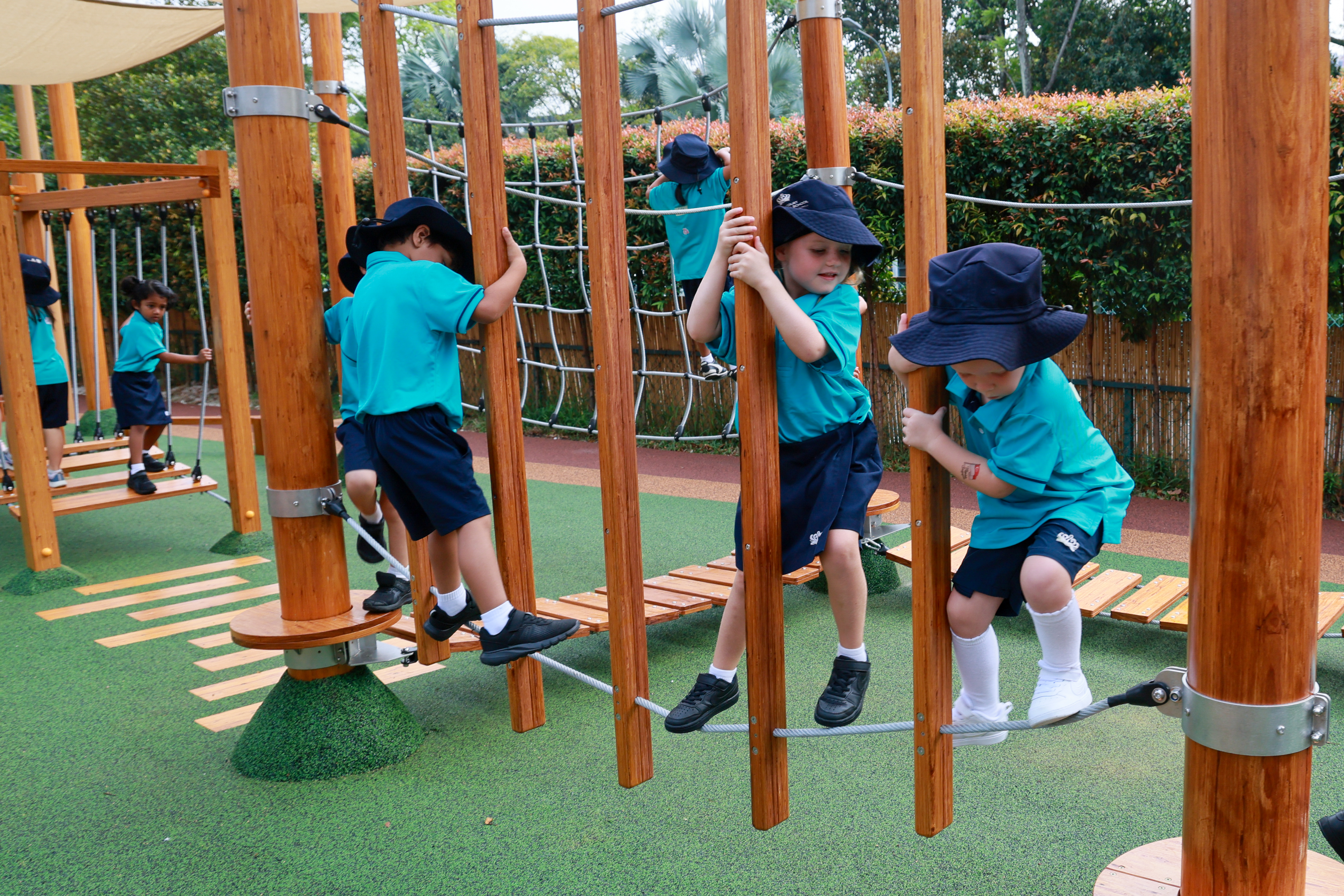
Children playing at the new Discovery and Play Cove at Dover Court International School

Key takeaways
- Play is the mechanism through which young children learn, not a break from learning. Decades of research, including the EPPE longitudinal study and work from Cambridge's David Whitebread, show that play-based settings produce stronger long-term outcomes than early formal instruction.
- The quality of adult-child interaction matters more than the specific approach. Whether a school describes itself as Montessori, Reggio-inspired, Forest School or blended, what counts is how skilled the adults are at following the child's lead and how well the environment supports exploration.
- Reading and writing aren't sidelined in good play-based settings — they're built on the oral language, vocabulary and cognitive foundations that play develops first. Schools should be able to explain how this transition works.
- A well-designed early years space does a lot of the work. Look for areas that let children be active, make and build, and settle somewhere more quiet when they need to. Dover Court's new Discovery and Play Cove is a good example of a space set up around those different needs.
- Trust what you see on a school visit more than what you read in the marketing. Watch the children, look at the space, notice the adults, and ask concrete questions about how learning progresses.
Frequently asked questions
What is play-based learning?
Play-based learning is an early years approach where young children develop cognitive, social, emotional and physical skills through play rather than formal instruction. It can be child-led, adult-guided, or a balance of the two. The best settings combine children's natural curiosity with skilled adult interaction that gently extends what they're already doing.
Is play-based learning effective?
Yes. Decades of research, including the Effective Pre-school, Primary and Secondary Education (EPPE) project in the UK and a 2018 clinical report from the American Academy of Pediatrics, show that high-quality play-based settings produce strong long-term outcomes in literacy, numeracy, self-regulation and social development.
When will my child start learning to read in a play-based school?
Children in play-based settings start building the foundations for reading early, through oral language, vocabulary, sound and rhyme play, and recognising letters in context. Formal reading instruction starts between ages five and six, depending on the school's curriculum. Research suggests that pushing formal reading earlier doesn't lead to better long-term outcomes.
What questions should I ask on an early years school tour?
Ask how the school balances child-led play with adult guidance, how they track each child's progress, how they handle the transition into more formal reading, writing and maths, and how they use outdoor space. Concrete answers with specific examples are a good sign. Vague answers aren't.
How do I know if a play-based school is high quality?
Watch the children: confident, engaged, happy children are a strong signal. Watch the adults: look for them kneeling at a child's level, asking open questions and following the child's lead. Look at the space: it should feel thoughtfully arranged, with real children's work on display. And listen to how staff talk about learning: they should be able to explain the why behind what they do.
How do play-based early years programmes work at international schools in Singapore?
Most international schools in Singapore run early years programmes built on play, drawing on approaches like Montessori, Reggio Emilia, Forest School, or a blend of several. Many follow the English Early Years Foundation Stage (EYFS) framework alongside this. What varies most isn't the label a school uses but how well the adults are trained to guide children's play and how thoughtfully the environment, indoors and out, is set up for exploration. In a hot climate, it's also worth checking how seriously a school treats outdoor learning, since the best ones have worked out how to keep it going year-round rather than treating outside as a break from "real" lessons.
What is the NEST programme at Dover Court International School?
NEST (Nurturing Early Stages Together) is the early years programme at Dover Court International School in Singapore, covering nursery to Year 2. It follows the EYFS curriculum within an environment influenced by the Reggio Emilia philosophy, where play is treated as how children make sense of the world rather than a break from learning. The setting includes dedicated early years studios for creative exploration, and outdoor spaces used as a classroom in their own right, with children gardening in the school nursery and observing wildlife at the local park. Before joining, families attend Stay and Play sessions designed to build the child's confidence and relationships outside a formal setting.
What is the Discovery and Play Cove at Dover Court International School?
The Discovery and Play Cove is a 10,000 square foot play space at Dover Court International School in Singapore, built for children from nursery to Year 2. It's divided into zones so children can choose what suits them on the day: a climbing frame, trampoline and obstacle course for active play, a sensory wall for tactile exploration, a music-making area, and quiet corners for downtime. It's used mainly for free play at break times, alongside the school's outdoor atelier and garden, which are set up for hands-on learning. Like the rest of their spaces, the Discovery and Play Cove is an extension of the classroom they can transition to without it feeling like a separate area.
