.svg)
-1.png?width=50&name=Team%20pics%20(2)-1.png) By
·
4 minute read
By
·
4 minute read
South Korea ranks among Asia's top destinations for expat families, with international schools that match the country's reputation for academic excellence.
With 50 to 60 international schools across Seoul, Incheon, and Busan, spanning American, British, and IB curricula, the options are strong. Tuition ranges from $18,000 to $40,000 USD per year. This guide covers everything expat parents need to know: curricula, fees, admissions timelines, and how to find the right fit for your child.

List of International Schools in South Korea
The following is a selection of international schools currently listed on doris. Schools are shown for informational purposes only. doris does not rank, rate or promote any school, all listings reflect publicly available information presented impartially.
|
School |
City |
Curriculum |
View school |
|
Seoul Foreign School |
Seoul |
IB, British Curriculum |
|
|
Dulwich College Seoul |
Seoul |
IB |
View school |
|
Korea International School |
Seoul |
American Curriculum |
View school |
|
Dwight School Seoul |
Seoul |
IB |
View school |
|
Yongsan International School of Seoul |
Seoul |
American Curriculum |
View school |
|
Chadwick International |
Seoul |
IB |
View school |
|
Seoul International School |
Seoul |
American Curriculum |
View school |
|
Asia Pacific International School Seoul |
Seoul |
American Curriculum |
View school |
|
Cheongna Dalton School |
Seoul |
American + IB |
View school |
|
Gyeonggi Suwon International School |
Incheon |
American Curriculum |
View school |
|
Busan Foreign School |
Busan |
American Curriculum |
View school |
|
International School of Busan |
Busan |
IB |
View school |
American International Schools in South Korea
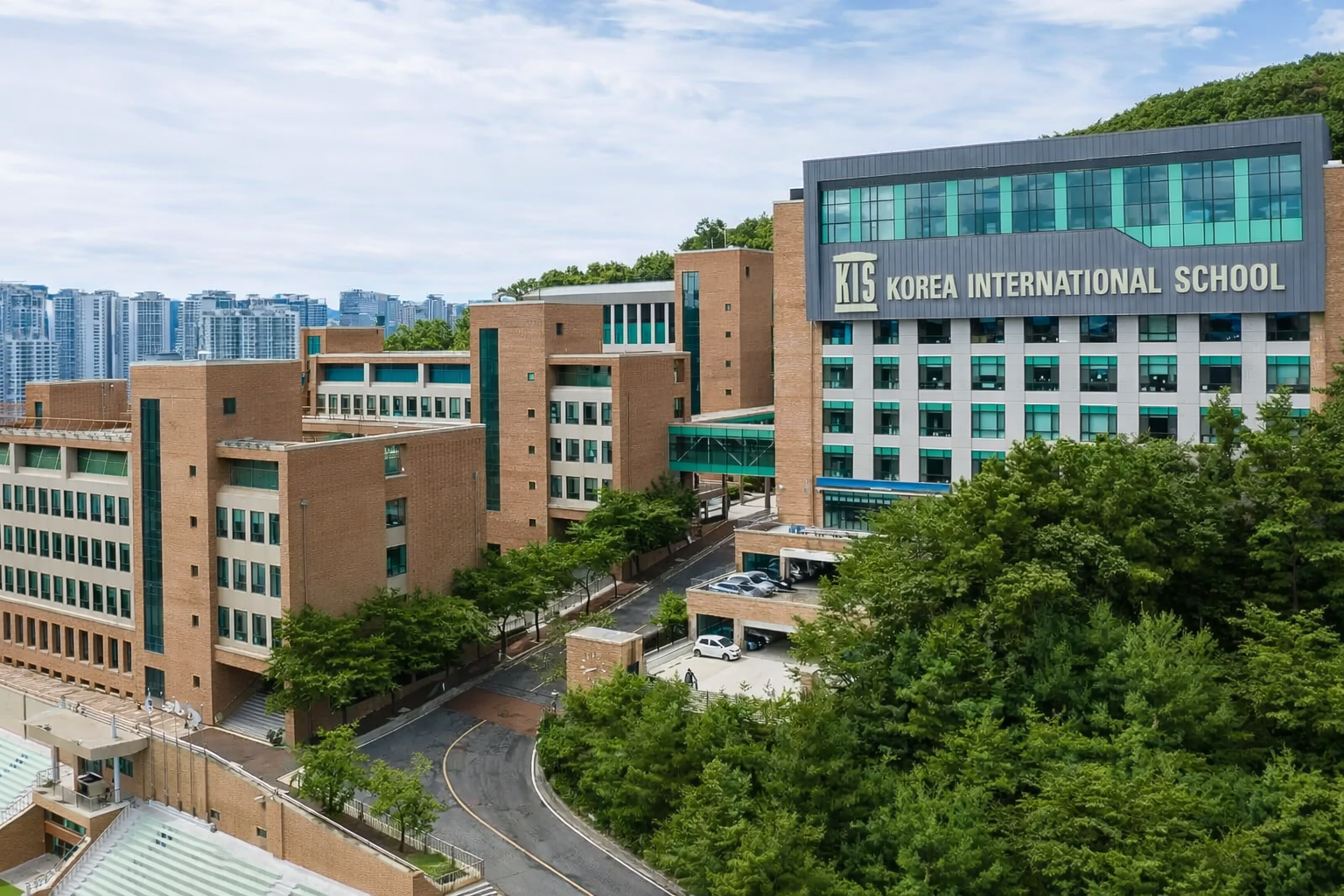
American curriculum schools follow the United States education model, emphasising critical thinking and student-centred learning. These institutions typically offer Advanced Placement (AP) courses, preparing students for American university entrance examinations.
Korea International School (Ages 3–18, Gyeonggi/Seoul) offers American curriculum with Advanced Placement (AP) programmes. The school operates multiple campuses and serves 1,200+ students with strong focus on college counselling and university pathways.
Yongsan International School of Seoul (Grades K–12, Seoul, $20,000–$26,000 USD annually) operates American curriculum with emphasis on community service and student wellbeing. Located near Itaewon, it serves 600+ students from diverse international backgrounds.
Learn more: College Board Advanced Placement
British International Schools in South Korea
British curriculum schools follow the English National Curriculum and IGCSE standards. Students sit for IGCSE examinations at age 16 and may pursue A-Levels in Years 12–13, creating direct pathways to UK universities.
Dulwich College Seoul (Grades K–12, Seoul, $27,000–$30,000 USD annually) operates British curriculum with IB Diploma options. The school serves 800+ students with comprehensive facilities and strong pastoral care systems.
North London Collegiate School Jeju (Grades K–12, Jeju, $24,000–$34,000 USD annually) brings rigorous British curriculum standards to Jeju island. Serving 400+ students, the school emphasises academic excellence and global perspectives.
Learn more: Cambridge Assessment International Education
IB Schools in South Korea
The International Baccalaureate (IB) Diploma Programme serves students aged 16–18 and is recognised by universities worldwide. Many schools offer both IB and national curricula for educational flexibility.
Dwight School Seoul (Grades K–12, Seoul, $18,000–$24,000 USD annually) offers American curriculum with IB Diploma options. The school serves 400+ students with focus on innovative education and college counselling.
Branksome Hall Asia (Grades K–12, Jeju, $27,000–$33,000 USD annually) combines British curriculum with IB Diploma Programme. Serving 500+ students, the school emphasises leadership development and environmental stewardship.
Learn more: International Baccalaureate Organisation
What Parents Say about International School In South Korea
Expat parents relocating to South Korea consistently highlight the welcoming and supportive community found at international schools. Many parents from expat community like Reddit and Facebook report that the diverse student body, typically comprising 40–60% expat families and 40–60% Korean nationals, creates an inclusive environment where children from different backgrounds thrive together. Parents appreciate the emphasis on student well-being alongside academic rigour, noting that international schools in Korea prioritise mental health support, counselling services, and balanced development.
The parent community itself is often cited as invaluable, with established networks that help families navigate the challenges of raising children abroad. Parents also mention that international schools offer extensive extracurricular programmes, from arts and athletics to robotics and community service, providing children with opportunities to develop interests beyond the classroom.
Tips for Finding the Right School
Choosing the right curriculum:
American curriculum suits families uncertain about university destination or seeking broad-based education. British curriculum is ideal for UK university planning. IB appeals to globally mobile families seeking internationally recognised qualifications.
School location and commute:
Schools in central Seoul (Gangnam, Itaewon) are metro-accessible but command premium fees. Satellite cities (Incheon, Gyeonggi) offer lower costs with longer commutes. Most schools operate shuttle services.
Campus visits and admissions timing:
Visit campuses before applying. Most schools operate Northern Hemisphere calendars (August/September start) with rolling admissions. Check admissions calendars on doris to understand application windows and deadlines.
Budget for hidden costs:
Beyond tuition, budget for uniforms, transportation, meals, technology fees, and extracurricular activities. Request comprehensive fee schedules from each school

Frequently Asked Questions
Q: How many international schools are in South Korea?
A: South Korea has around 45–50 international schools, with the largest concentration in Seoul and the surrounding Gyeonggi region. Additional schools can be found in Incheon, Busan, and Jeju Global Education City.
Q: What curriculum options exist?
A: Most international schools in South Korea follow either the American or British curriculum. Many also offer the International Baccalaureate (IB) programme, particularly at the Diploma level for secondary students.
Q: How much do international schools cost in South Korea ?
A: Annual tuition typically ranges from $18,000 to $40,000 USD, depending on the school and grade level. First-year costs can reach $25,000 to $60,000 USD once application fees, capital levies, deposits and other expenses are included.
Q: Are there waiting lists for international schools?
A: Yes. Popular schools in Seoul often have waiting lists, particularly for early years and primary grades. Applying early and remaining flexible with school choices can improve admission chances.
Q: Can students join mid-year?
A: Many schools accept mid-year admissions if places become available. Students may need to complete assessments or interviews before being offered a place.
International schools in South Korea provide rigorous academics, diverse curricula, and vibrant multicultural communities. Whether your family prioritises American, British, or IB education, South Korea offers established institutions with strong university outcomes.Parents can explore international schools in South Korea and compare curricula, fees, and admissions timelines using doris, a free and impartial platform designed to support informed school selection.