-1.png?width=50&name=Team%20pics%20(2)-1.png) By
·
4 minute read
By
·
4 minute read
Japan has more than 100 international schools, with the largest concentration in Tokyo and nearby cities such as Yokohama, Osaka, and Kobe. These schools are designed primarily for expatriate and internationally mobile families, offering English-language education and globally recognised curricula that allow students to transition smoothly between countries.These schools usually teach in English and follow one of three main systems: the International Baccalaureate (IB), the British curriculum or the American curriculum.
Annual tuition typically ranges from $5,000–$27,000+ USD, depending on the school and grade level. Popular schools in Tokyo can be competitive, so many families begin their search several months before relocating.

List of International Schools in Japan
The following is a selection of international schools currently listed on doris. Schools are shown for informational purposes only. doris does not rank, rate or promote any school, all listings reflect publicly available information presented impartially.
| School | City | Curriculum | Age | View School |
|---|---|---|---|---|
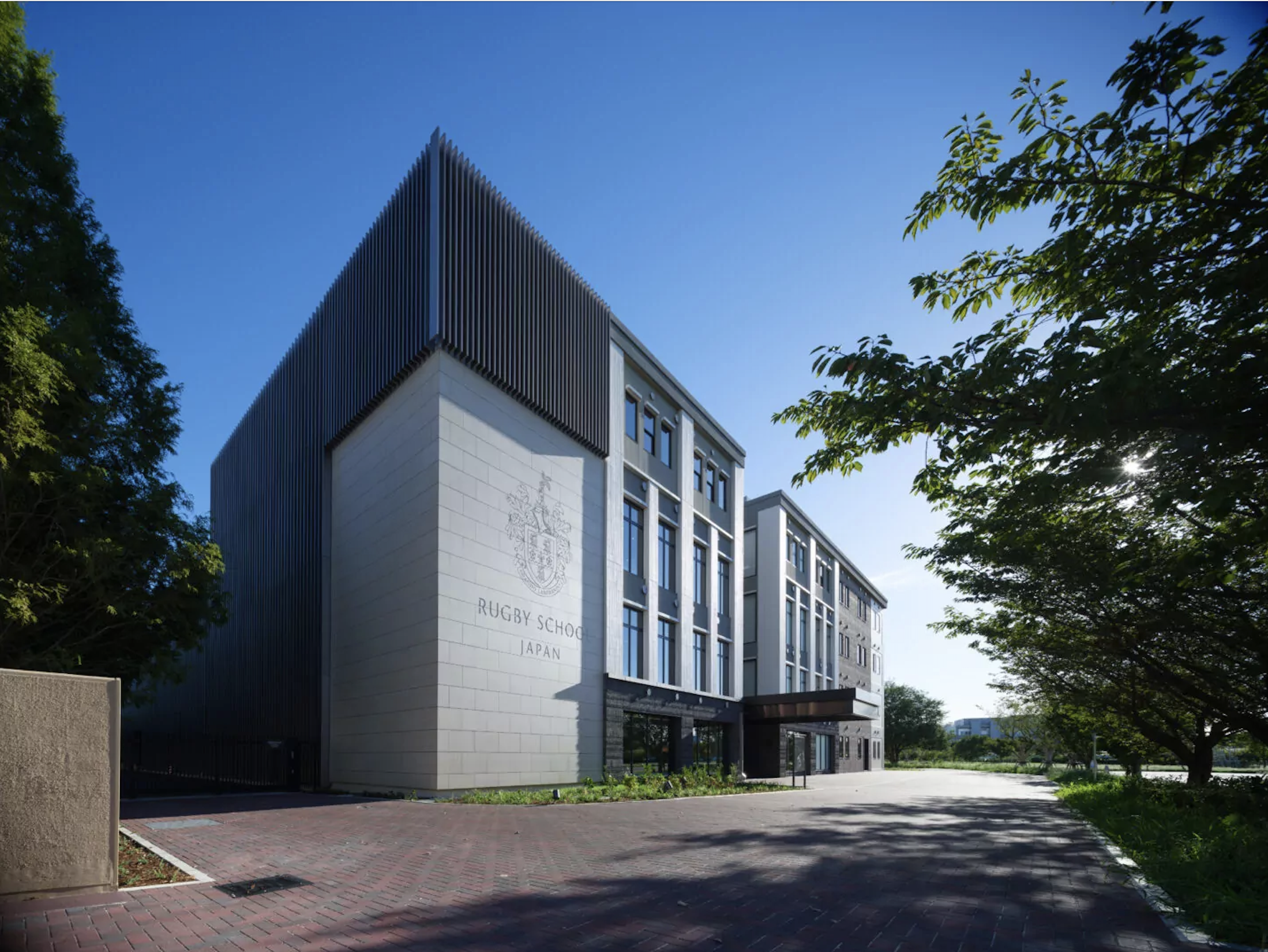
| Rugby School Japan | Chiba (Tokyo area) | British (Cambridge IGCSE, A-Levels) | 11–18 | View School |
| Tokyo International School | Tokyo | IB | 3–16 | View School |
| KA International School | Tokyo | American / AP | 5–18 | View School |
| Musashi International School Tokyo | Tokyo | Cambridge | 3–18 | View School |
| New International School of Japan | Tokyo | International / Bilingual | 3–15 | View School |
| Yokohama International School | Yokohama | IB | 3–18 | View School |
| Saint Maur International School | Yokohama | American / IB | 3–18 | View School |
| Osaka International School of Kwansei Gakuin | Osaka | IB | 3–18 | View School |
| Canadian Academy | Kobe | IB | 3–18 | View School |
| Kyoto International School | Kyoto | IB | 3–18 | View School |
American International Schools in Japan
American international schools in Japan generally follow a U.S.-style curriculum that focuses on a broad education, including academics, arts, sports, and extracurricular activities. Many offer Advanced Placement (AP) courses or the International Baccalaureate (IB) Diploma in the final years, helping students prepare for university applications in the United States and other English-speaking countries. Examples include The American School in Japan and Yokohama International School.
British International Schools in Japan
British international schools in Japan typically follow the National Curriculum of England, with students taking IGCSEs around age 16 and A-Levels in their final years. This pathway allows students to specialise in a few subjects and is well suited for families planning for university in the UK or other countries that recognise the British education system. Examples include The British School in Tokyo and Rugby School Japan.
Tips for Finding the Right School
Start with your university destination. If you know your child is likely to apply to UK universities, a British curriculum school makes the transition smoother. US-bound? American or IB. Unsure or likely to move again? IB is the most portable.

Think about the commute early
Large cities in Japan can be surprisingly spread out, and a school that looks close on a map may still mean a long train or bus journey each way. When narrowing down your options, focus on schools within a realistic distance from where you expect to live.
Visit the school if possible
It’s difficult to understand a school’s culture from its website alone. Open days and campus visits can give you a much clearer sense of the teaching style, environment, and community. If you can’t visit in person, many schools also offer virtual tours or online open days.
Check mid-year availability
If your family is relocating outside the main September intake, ask whether the school accepts applications during the year and whether spaces are available in your child’s year group.
Look beyond tuition
Tuition is only part of the overall cost. Registration fees, capital levies, uniforms, and transport can add $3,000 or more per year on top of the advertised tuition, so it’s worth checking the full fee structure before applying.
What Parents Often Ask Schools
Parents relocating to Japan usually ask a few practical questions before applying:
- Is there a waiting list for our child’s year group?
- Does the school accept mid-year applications?
- What is the mix of international and Japanese students?
- How much do additional costs such as transport or uniforms add to tuition?
These questions can help families understand both the academic environment and the practical realities of attending an international school in Japan.

What Parents Say About International Schools in Japan
Many parents researching international schools in Japan turn to online communities such as Reddit to compare experiences and learn from families who have already gone through the admissions process. Their discussions often highlight practical insights that don’t always appear in official school information.
“Everyone talks about curriculum first, IB vs American vs British, but the thing that actually changed our decision was university counselling. A few parents told us the counsellors at our school were incredibly proactive with US applications, and that made us realise the support system matters more than the label of the curriculum.” — Parent of high school student, Tokyo
“The biggest difference we noticed during campus visits wasn’t facilities or rankings, it was the atmosphere. One school felt very competitive, while another felt collaborative and relaxed. Once we saw that, the decision became much clearer for our child.” — Parent of middle school student, Yokohama
Frequently Asked Questions
Q: How many international schools are there in Japan?
A: Japan has over 100 schools that describe themselves as international, with the largest concentration in Tokyo. The number offering a fully accredited international curriculum, IB, British or American, is smaller, and doris lists the key accredited options.
Q: Which curriculum is best for international schools in Japan?
A: It depends on where your child is likely to apply to university. IB is the most internationally portable. British suits UK university pathways. American suits US college applications. All three are well represented in Tokyo; choice narrows slightly outside the capital.
Q: How much do international schools in Japan cost?
A: Annual tuition typically runs from $3,000–$27,000 USD depending on year group and school. Budget for additional costs on top, registration, levies, uniforms and transport can add significantly to the total.
Q: Do international schools in Japan have waiting lists?
A: Yes, particularly in Tokyo and for Early Years and lower Primary year groups. Families are advised to begin their search at least three to six months before their planned start date.
Q: Can my child join mid-year?
A: Many schools accept mid-year applications, particularly IB and American curriculum schools. Availability depends on the year group. Contact schools directly to confirm.
Q: What English language support is available?
A: Most international schools offer some level of EAL support, but the depth of provision varies. If your child is not yet fluent in English, this is worth asking about specifically during any school visit or admissions call.